Search the Community
Showing results for 'transformation'.
Found 2,810 results
-
The best wingmen I have has been doing it for 3 years and I noticed that he was able to remain composed despite the nerves. When anxiety comes up, approach anxiety, your first set of the day or even later during the day. What you do is you don't stay, not for 1 minute, 10 minutes 2 hours, you leave after the first sentence, they call it warm up. Yet this guys approach was his first one of the day, he told me he was a bit nervous, then when approached went well and was a 30 minute conversation. What I make up from this was that approach anxiety doesn't rule him. He stays present, cool and smooth. Then during the conversation you have several points where you might want to move, look away, have nothing to say, moments you let the anxiety take control, you start fidgeting or talking fast. But what if we don't let anxiety take control even tho we feel it? What if we don't give expression to that anxiety, we don't start talking fast, we don't start fidgeting, we don't start to move around even tho that is everything that the body and anxiety wants to do and we remain calm and cool from the first approach on. Then this might be the real transformation, this exact thing made me think of Jeffry, who is anti warm up and state building and always talks about coming from presence and changing the signal that you give off, in the case of this guy his signal was cool and smooth despite the anxiety of his first approach of the day. What do you guys think?
-
When I came to AyaMadre for the second time in 2024, five years after my first time there, I made a deal with Maestra Estella. She agreed to build a house for me with a bathroom, a shower and a kitchen, and to let me stay at AyaMadre for one year for $5,000. The agreement also included participation in three ceremonies each week. This was almost the last of my money. I may have had only about $500 left in my bank account after making that investment. I was committing almost everything I had to the medicine path, trusting that this would become my home and that I would finally have a stable place from which to continue my healing and my work with Ayahuasca. The house was never completed. They did clear the land for it and began construction, but during the approximately four months that I spent at AyaMadre, they only managed to finish the initial frame of the house. What was supposed to be a simple agreement gradually became a constant source of stress and conflict. I kept asking them, with my very limited Spanish, "When are you going to build my house?" They kept postponing the construction and giving me different explanations: "What's your budget?" "You paid too little for one year." "We need to hire a contractor." "Building a house is a lot of work." "The materials cost a lot." I repeatedly told them that I didn't want to hear all the details about the construction. We had made an agreement. They would build me a house for $5,000, and I expected them to honor that agreement. This struggle continued throughout almost my entire time there, until eventually I felt that I had enough and decided to leave AyaMadre with my friend Kay. Looking back on it now, knowing what I already knew about Estella and her ways of extracting money from people, I should have known better. A smarter arrangement would have been to pay for the house only after it had been completed, rather than giving almost all of my money in advance. At the same time, I did spend approximately four months there, and at that time Estella was officially charging $2,500 per month, so texhnically I still received roughly a $5,000 discount for the time I stayed. I could therefore look at the situation as a difficult lesson rather than simply a financial loss. I had trusted someone with almost everything I had, and I learned something important about agreements, boundaries, trust and the difference between what someone promises and what they actually do. While I was at AyaMadre, I also received several warning signs that drinking a medium to high dose of the medicine, especially at night, was dangerous for me. There were several occasions when I felt a sense of separation returning. I could no longer feel the icaros in the same way, my movements would become awkward, and my reality would begin to look subtly "dead" or distorted. Despite these signs, I continued participating in the night ceremonies. Whenever I felt that sense of separation beginning, I would look toward the light, and again and again the light seemed to bring me back into a feeling of connection with Love. Eventually, I learned that the safest and most healing way for me to work with the medicine was during the light of day, with my eyes open. During those ceremonies I felt connected throughout the entire experience and received what felt like the deepest healing. Estella was the only Shipibo curandera I knew who regularly conducted ceremonies during the day, with two daytime ceremonies and one nighttime ceremony each week. The energy of AyaMadre itself seemed to reflect Estella's way of relating to her pasajeros and the way she ran the center. There was almost always a sense of lack and deprivation. There were frequent shortages of food and water. Construction projects seemed to begin and then be abandoned halfway through, while new projects were started before the previous ones were finished. There were unfinished tambos and others that badly needed repairs, with leaking roofs and mold. The bridge needed to be repaired, and almost everything at AyaMadre seemed to be constructed with the bare minimum of materials and, at times, what felt like the bare minimum of effort. The entire place felt to me like an Ayahuasca center for poor people, even though Estella was continually extracting thousands of dollars from her pasajeros. She somehow managed to make the place feel as though it were constantly dying of starvation because there were never enough resources. One pasajero even told me that he had received a vision that "the AyaMadre spirit is sick." Looking back at the state of the center during my time there in 2024, I thought that was an incredibly accurate description. The kitchen was probably the most stressful place of all. There were often stressed and angry volunteers, complaining, gossiping and smoking cigarettes. I remember that on the day I arrived, there were about five people smoking cigarettes in the kitchen. The contrast between the sacred medicine that everyone had come there to work with and the atmosphere surrounding its preparation was difficult for me to reconcile. I had come expecting a place dedicated to healing, love and transformation, yet much of the ordinary human behavior around me seemed to reproduce the same patterns of scarcity, fear, frustration and competition that I had spent so much time and effort trying to move away from. Despite all these challenges, I processed an enormous amount of trauma during the four months I spent at AyaMadre. Almost every ceremony brought tears of joy, gratitude and liberation. Toward the end of my time there, something profound was happening in the way I perceived the world. Every "scene" in my reality, even something as ordinary as the blue plastic table or the kitchen which was built with simple materials brought from the jungle, could suddenly look like a masterpiece designed by a genius artist. The beauty wasn't dependent on luxury or perfection anymore. I could look at the simplest objects and feel an overwhelming appreciation for their existence. I knew I was slowly waking up to deeper and deeper layers of the beauty of Paradise. One day, Kay and I were walking through the jungle when we discovered another center nearby called Marosa. It was only about a fifteen or twenty minute walk from AyaMadre. Synchronistically, I remembered that I had first discovered Marosa during my first stay at AyaMadre in 2019, about five years earlier. At that time, the maloka had only just begun to be built. Now, five years later, the entire center had been completed and was receiving pasajeros. What struck me immediately was how different the energy of Marosa felt from AyaMadre. The place felt tranquil, beautiful and well cared for. The food was prepared with love and served with genuine smiles. The tambos were constructed with quality materials and felt more like little cabin houses than the poor, barely raised structures I had become accustomed to at AyaMadre. Everything seemed to have been built carefully by people who knew what they were doing and who cared about the environment they were creating. I felt that AyaMadre had prepared me to appreciate everything about Marosa to the fullest. After everything I had experienced, I could see the beauty of every detail. I fell in love with the place. Eventually, Kay and I left AyaMadre together and went to the city of Iquitos, where Kay got me a room at what became the best hotel I had ever stayed in, Casa Morey. "Casa" means "house" in Spanish, while "Morey" reminded me of the Russian word "морей," meaning "of the seas." I began seeing the name as "House of the Seas," which seemed remarkably appropriate for what I discovered inside. The hotel was unlike any other hotel I had ever experienced. It felt more like a hotel and museum combined, with the entire place decorated with real antique artifacts connected to ships, navigation and nautical adventures, many of them appearing to date from around the seventeenth through nineteenth centuries. The owner was an antique collector of nautical artifacts, and there was an entire museum room filled with beautiful objects that seemed to transport me back into another era, making me feel as though I had suddenly become an adventurer aboard an old ship. In the center of that museum room, hanging on the wall, was an antique wooden masterpiece that immediately caught my attention. It looked almost like a Russian terem or palace, with sharp pointed towers and two angels standing on either side. In the center was Her Majesty Mother Mary, depicted as a tranquil, elegant, gentle and almost angelic Goddess in turquoise. Something about the image deeply resonated with me. After everything I had experienced with the Divine Mother, Mother Wolf and Mother Mary, encountering this particular image in the center of this antique nautical museum felt like another message of reassurance arriving at exactly the right moment. The rooms in the hotel had high vaulted ceilings, antique furniture and even old-fashioned rotary dial telephones. Every detail reinforced the feeling that I had been transported back in time. I loved the place so much that I decided to extend my stay for one more night, even though I had very little money remaining. In the second room they gave me, there was an Ayahuasca visionary painting depicting a ship in the center surrounded by all kinds of spirits and beings. At the wheel stood the captain with his crew of adventurers around him. After everything I had just been through, I couldn't help but see myself in that image. Casa Morey felt like a marvelous gift that had somehow appeared at exactly the right moment. I was basking in the beauty of the entire hotel, appreciating its antique artifacts, its architecture, its atmosphere and the care that had gone into creating it. I felt as though the entire hotel had been built just for me to discover at that exact moment and appreciate to the fullest. After spending four months at AyaMadre in what my mother had once accurately described as "bare minimum comfort," I suddenly felt like a king in a palace. I also felt like a captain leading the ship of my destiny, with my crew of Kay and her husband Dan beside me. Both were special forces military veterans whom I experienced as exceptionally intelligent, powerful and supportive people who believed in me and were willing to help me not only as friends but financially as well. At that moment, I felt like I had reached the peak of my power, both spiritually and physically. While I was staying at Casa Morey, I made a Facebook post titled, "I'm the captain of my ship." My mother then sent me a message: "главное чтобы твой корабль не потерпел крушение," which translates as, "The main thing is that your ship doesn't sink." I responded: "Уже терпел, теперь непотопляемый." In English: "My ship has sunk before. Now it's unsinkable."
-
Lately I've come to appreciate the power of great leadership and the transformation impact that can have in countries, companies and society at large. Two striking examples are Nayib Bukele in El Salvador and Lee Kuan Yew in Singapore. Bukele inherited a country called the murder capital of the world. His government’s aggressively cracked down on gangs and organised crime, despite receiving enormous global pushback by human rights movement, it has successfully transformed public safety to the point that now the US considers it safer than Sweden. The investment on education has also been heavy, with the program 2 schools everyday being built, over 900 schools have already been delivered since the start of the initiative last year. The last polls state that 94% of the country supports him, a record almost unheard of in democratic societies. Decades earlier, Lee Kuan Yew led Singapore from a small, poor and forced to be independent state into one of the world's most prosperous and developed economies. His vision was built around long-term thinking, strong institutions, economic pragmatism, education, infrastructure, and an uncompromising focus on national development; creating a successful style of government called state-guided capitalism. Ultimately, the difference between a stagnant society and a thriving one may sometimes come down to the quality of their leaders and whether they are capable of thinking beyond the next election, have a compelling vision and deliver tangible results. (Post written with the help of AI to make it smoother)
-
Friday: September 4th, 2026. Life-changing transformation due to education is distinct from brain rot.
-
People gotta deal with what they got. A monk is going to have aspirations that an average worldly person might not have, and the capacity for transformation will be different. So if someone has a need which they don't have the capacity to alchemize or transmute, than they may just live with it. For people working on their character. They may have a need which they need to accept, but it doesn't have to rule them, and can be met with consciousness. Then transformation can happen.
-
When I came out of my first 18 month hell, 20 months if I count from when I first lost my ability to sleep, things were different. I was different. I was reborn. I fully awakened to life. I awakened. I became enlightened. I knew that I had conquered death, so death was not something ahead of me anymore, it was behind me. Time became my ally, time was now on my side. I did not have to hurry to finish what I wanted to do. I now had eternity. I knew that by healing myself, I was alchemizing death into life and transforming the depths of hell I had endured into the joy of Paradise. Every day became a wonderful adventure. I was never as motivated to work on myself and to live my life to the fullest. Living became my greatest joy and passion. I wanted to celebrate being alive every day, and that's exactly what I did. There are two stories or myths that are deeply embedded into the collective human consciousness that have resonated with me and describe metaphorically what happened to me. The first one is Jesus Christ dying on the cross for the sins of all of humanity, going through hell, conquering the devil, conquering hell and being resurrected in glorious ascension to the throne of Heaven as the savior of the world. In the Orthodox chants, they sing: "Христос смерть поправ," which translates roughly as "Christ has conquered death." Ayahuasca had shown me that "I would die for the sins of all of humanity" in the ceremony where I faced my greatest fear. That prophecy came true. I wore an Egyptian-themed shirt during that ceremony called "Immortal Combat." It had Anubis, God of the Underworld, facing off against Horus, the God of Light. The second myth that resonated with me is the ancient Egyptian myth of King Osiris being killed and dismembered by his jealous uncle Set, the God of chaos and destruction, and then his pieces being gathered and assembled by his wife, the Queen of Magic, Isis, with the God of Light, Horus, being born from the union of Osiris and Isis. There is more to the story of Horus and Set, which will also become an important part of my journey, and I will write about it later. I was transferred over to another recovery program called Shoreline after completing three weeks at McDonald Sharp Center. The night before talking to them on the phone for an initial interview, I had a vision of a trident. The next day I found out that Shoreline Recovery had a trident in their logo. A trident is a "symbol of the highest authority in the heavens," according to one interpretation that I highly resonated with. I spent about two or three months at Shoreline, first in their Escondido location and then in their Normal Heights location. When I moved to the Normal Heights location, I was allowed to go out of the house about a week after I arrived. That was the next level of my healing phase and liberation, and that is when I discovered Maya Moon Cacao Cafe, which was only one block, about a 10 minute walk, from our house on 33rd Street. The place became my sanctuary, a place for integration, meditation, journaling, drawing, peace and quiet, and a break from all the house noise, drama and madness that was happening at the house, where I was living with about four or five other men with addictions and deep mental issues. When completing Shoreline, which I cut short, they refused to give me the "exit ceremony," where everybody gets to say something about a person as they leave the program, even though I aced their whole program and was a role model to all of those kids there. I also had a last talk with their psychiatrist, who attempted to recommend putting me on different medications such as antidepressants and anti-anxiety medications. She was, by far, the craziest-looking herself and looked like she was taking a lot of these medications herself. I refused all the medications and was "warned of possible negative consequences, including a possible relapse." My counselor, who was also present during that conversation, told me, "If you ever relapse, I hope you remember this conversation." I did not see a relapse as ever being a possibility. I had conquered hell. I had defeated the final boss. I had no desire to ever drink alcohol, use drugs or smoke cigarettes again. I thought they were both crazy and irresponsible for trying to put a completely healthy human being on their prescription drugs. About three or four months after I was out of hell, after completing Shoreline, my father took me in to live in his apartment in La Mesa, California, on Shasta Lane. Shasta comes from the Russian word "счастье," meaning "happiness." Shortly after, I recorded a video called "I Awakened, Crying Tears of Joy and Gratitude." I also posted a post at Actualized.org called "I Awakened, Ask Me Anything." I was beginning to document this completely new chapter of my life, a life that felt almost impossible compared to where I had been only months earlier. I had gone from believing that I was trapped in eternal hell to feeling as though I had been given my life back, and I wanted to understand, celebrate and share everything that had happened to me. In regards to Victoria and my relationship, no matter how much I tried, she would hear nothing about "what happened to me," what I had gone through and why. She was completely closed off to any conversation about us ever getting back together, and still is to this day. She said, "You started drinking, so we broke up, and Hell? It's all in your head, you made it all up." It took me a long time and much effort to "accept" this situation with her, knowing that I had gone through hell for the sake of our True Love. Despite this, I live by this prayer every day: "My intention is to be the best that I can be, to embody the Truth of love that I know I am, every day, in every moment, for my own highest good, for the highest good of my beloved Victoria, the one who I know is my true love forever, for eternity, and the highest good of all, aho!" The way I see it, I am being guided to focus on myself and embody the Paradise of Love on Earth, in a physical realm, and eventually Victoria will come back to me when she is ready. I want to make it clear that this stance that I have towards Victoria and me is unshakable. I will never ever "stand down," "let her go," "forget about her," "change my mind," "move on," or any of this nonsense. I have already proved to myself that I was willing to die instead of betraying Victoria for the sake of our True Love. I sacrificed my life on the altar of our True Love. In one of Keera's songs, during the second ceremony with Victoria and me both present, Keera sang: "Oh, child, don't you worry, this life is a true love story." True Love is true because I know The Truth of who my True Love is. Victoria is "victory" in Spanish, victory over death. She is my Victoria, my Victory! And I am Vladimir, "Vladi" meaning to rule and "mir" meaning peace or world. Our first initials make up the letter "W," "double You" in English. Two bodies, one soul, double you, double me. This is the meaning of the twin flames. The way all the events played out to lead me to my eventual death and how it all happened for me to discover The Truth is pure genius. The entire creation is made of pure genius. God is pure genius. I am pure genius. One of the messages of confirmation I received later, months after coming out of hell, when walking around in La Mesa, was a barbershop named "Crowned by Keera." To me, these kinds of synchronicities felt like little messages woven into the fabric of reality, confirmations appearing at exactly the moments when I needed them. They became part of the way I learned to see the world after coming out of hell. When I was in the depths of hell, drinking at the hotel, I had a brief conversation with Victoria and told her, "You can have all of my silver, you can forget about me, I'm lost." Well, that's because I didn't know I would ever make it out of it. I was facing the fear of being stuck in hell for eternity every day during those 18 months. However, now that I was out of hell, I needed my money, so eventually she agreed to give me back my silver, although she mentioned that she sold $18,000 worth of it and used that money to pay rent. I thought it was fair because I told her she could have it all at one point, so legally she could have actually kept it. I think there was about $40,000 of it left out of the $500,000 that I had when I first began my journey with magic mushrooms six years ago. Being fresh out of an 18 month hell, not having any job, not having any money, having all my credit cards maxed out, and wanting to focus fully on my recovery, having that good chunk of money was a gift from the heavens. I felt like I had awakened in Paradise. I knew I was now in Paradise. I was crying tears of joy and gratitude for being alive every day. I was also crying tears of salvation and liberation. I knew that I was saved from eternal hell, that I had conquered death, defeated the devil, which was myself, and won immortality, physical immortality, eternal life. I also knew that I was forgiven for every sin. I knew that the devil, which is who I was the entire time I was in hell, was forgiven and innocent, and thus everybody was also innocent. I knew that I had become a force of pure Goodness. I knew I was Good and that I was Love. That is the Truth that I was now embodying. I was spared by the mercy of God, Mother Mary, my Divine Mother Wolf, the guide and guardian through the underworld, also known as hell. My greatest priority became embodying the Truth that I know, which is: I am Love, I am Immortal, and I am Truth. I also knew that Victoria is my True Love, forever, for eternity. All of my actions became aligned with this Truth that I now knew. Embodying the Truth that I know became the highest good because I now knew that this is what will redeem all and bring justice of love to our world. My Truth is the medicine that our world has been waiting for. "And ye shall know the Truth, and the Truth shall set you free." This is a biblical quote from the Gospel of John, John 8:32. The original New Testament was written in Greek, and the phrase is traditionally translated into English as "And you shall know the truth, and the truth shall make you free." It also happens to be a slogan associated with the CIA, which aligned beautifully with my new worldview. I knew that the entire creation had been working this whole time to manifest this Truth that I now knew. Everybody that has ever lived had helped me embody this Truth with their entire lives, meaning everybody had fulfilled their life purpose. The entire Universe had helped me embody this Truth with absolutely everything, every moment that had ever existed. I also knew that everybody that had ever lived, all beings and the entire creation, was absolutely innocent. Thus, I began the process of healing through forgiveness, which is a process that takes time. This realization changed the way I looked at everything around me. Instead of seeing a world filled with enemies, mistakes and things that needed to be condemned, I began seeing a world filled with beings that were somehow part of the same enormous unfolding process that had brought me to this point. Forgiveness became one of the foundations of my healing. I was dancing, swimming in the ocean, rollerblading, going to kirtans, song circles, creating rituals, participating in ceremonies, drawing, journaling, practicing yoga and meditation, meeting spiritual people, exploring, participating in multiple choirs, drinking cacao, singing, praising and giving gratitude to my Divine Mother Wolf as my savior, guardian and teacher, as the one who had saved me from hell. I now knew her as Mother Mary, "Bogorodica," meaning the one who gave birth to God. Everything that I had once taken for granted suddenly felt precious. Movement, music, nature, people, water, sunlight, singing and simply being alive all became opportunities to celebrate the miracle of existence. One of my favorite activities, which I was doing almost every day, was riding my bicycle and taking public transportation, trolley, train and buses, to get around San Diego. For the first time, after living in San Diego for about 24 years at the time, I truly discovered the beauty of the public transportation system. I felt like a kid who had just entered the world for the first time. Everything was magical and adventurous, and every moment was filled with beauty and appreciation for everything that was present in my field of consciousness. Time seemed to have disappeared because I was always in the present moment. I took a ride by trolley and bus from La Mesa to La Jolla Cove for my morning swim in the ocean almost every day, which took about five hours of travel time there and back, and it felt like a breeze. I was also helping my state with a microdose of magic mushrooms, cacao, kombucha and yerba mate. My brother kept nagging me about when I would start working on Clever Techie because he worried that I would run out of my silver soon. I only ended up recording one very short video during about 18 months that I was living in Paradise in San Diego. I would also spend a lot of time riding my bicycle at Lake Murray, which was now within walking distance from me. One of the first things I did when I moved to my father's place near Lake Murray was go to the lake, to my spot where I had been out of the eyesight drinking alcohol and smoking cigarettes, and clean out two full trash bags of empty alcohol cans and bottles that I had trashed the place with during my hell state because I couldn't even find the strength to carry them to the trash can. It felt like a ceremony of cleansing and closing out the Hell cycle. I had spent so much time there during the darkest period of my life, hiding from the world, drinking and smoking, and now I was returning to the same place as a completely different person. Cleaning up the physical mess felt symbolic of cleaning up the remains of that chapter of my life. Another favorite activity was going to kirtans, which are devotional chanting and singing, praising various Hindu deities and beyond. I would drink cacao and take a microdose of magic mushrooms before every kirtan and end up being the loudest guy at every kirtan, screaming with joy and gratitude, praising the Divine for the sheer genius of the entire creation. After my time in motels, surrounded by bottles of alcohol, buds of cigarettes and trash, my external reality now reflected my inner Paradise, with beautiful people singing songs of praise to deities together in a house called The Pearl, with a huge window in the living room from which the ocean was visible. Scott would always open his kirtans with a chant to Ganesha and later put a beautiful Ganesha relief artwork right above his fireplace in the living room where we had kirtans. I was feeling great joy and gratitude, specifically for Ganesha as the remover of obstacles, because it was from the moment that I started drawing Ganesha that I felt something shift for the first time during my time in hell, which gave me a spark of hope that my salvation was still possible. At the time, Scott was doing his kirtans with a beautiful Russian woman named Anna. I talked to Anna and they agreed to have me share a song in Russian called "Жива Матушка," which is a chant of praise to the Slavic Goddess of Life, Zheeva. It's a chant of gratitude and praise for the force of life and life itself. This was a very special kirtan event for me, and I recorded a video of it. For the first time in my life, I had truly discovered San Diego, California, as the Paradise that it truly is. I also knew with zero doubt that the external reality is a mirror reflection of my internal state of being. As I was now embodying inner Paradise, the outer Paradise reflected back to me. The same city that I had lived in for decades suddenly looked completely different. The ocean, the streets, the trolley, the parks, the people, the sunlight and even the ordinary details of everyday life seemed to be reflecting something that had changed inside of me. After having spent so long experiencing the world as Hell, I was now experiencing the same physical world as Paradise. At some point a revelation came to me about the name of the state, California. As I looked at its composition, it could be read symbolically as "Cali-for-Nia," or Kali for Nia. Kali is the Hindu Goddess of destruction. I began seeing the name California symbolically as "Kali for Nia," with Kali representing destruction and Nia representing a purpose or intention. Thus, California became, in my personal symbolic interpretation, "destruction for a purpose." To me, this became another poetic reflection of what I had just lived through: destruction followed by transformation, the old life being broken down so that something entirely new could emerge from it.
-
I see the necessity of religions in relation to Kohlberg's Stages of Moral Development model... In the earlier phases of moral development, there needs to be a strong sense of authority outside of one's self that will reward if someone does "good" and punish when someone does "bad." And that enables a society with a low level of moral development operate in ways that minimize selfish and ruthless behaviors. If someone who isn't developed enough to abstain from selfish behavior for its own sake believes that they'll be rewarded for abstaining from the selfish behavior... or punished for engaging in the selfish behavior... they are less likely to do the selfish behavior. And there are many drawbacks to this way of thinking... as it increases a sense of judgment and punitiveness towards themselves and others. But it's a useful way of operating when the higher stages of moral development have yet to be reached en masse. But once individuals develop to the higher stages of moral development where morality is derived from empathy, compassion, and conscience, there is no longer a moral need for mass adherence to religion. Past that point, religion can be engaged with practically as a method of meaning-making and spiritual connection/transformation for the masses who are more geared towards pre-defined exoteric spiritual paths. (Though there are also usually more esoteric paths that are off-shoots of those exoteric religious practices that exist for people who are more interested in a deeper quest). And religion can also be used at the foundation for community... sometimes positively and sometimes negatively. Past moral needs, social preferences, and pre-defined paths of spiritual connection... religion can also be foregone for those who find their sources of meaning and existential interconnectedness elsewhere... or who want an esoteric spiritual quest that they custom-tailor for themselves.
-
I tested, the stuff it works, some minor electronic stuff where there is not enough information to the seller, and I'd be required to have an a degree in electronics most likely, in order to calculate I listend to some music and I wonder, why I even like this and what the core development and issue is with such humans, as what it evokes, even if it's healing to me is odd, it's deeply inspiring, and at the sametime hynotizing and foolish, but it feels very good and I should trust my emotions partially as I know I am like this also, but this is exactly the core issue I saw with lack of responsibility and just being a male boy, where I and my mother struggle to reconcile and we don't have that much time, idk how long she will life, even if she is strong and has super vibrant tendencies, she still has 7k, the new boyfriend should do her well, I don't think the R&B guys go beyond insight with any actual integration, and what I experienced as a man with such women, with men/boys who transcended that it's odd as it's the divine feminine, to me or an expression of that, but the core issue is, it makes me just like them, and I have indications that are just like them most of it is a physical transformation, for e.g this song after I had the white light experience and golden aura experience a lot of that energy leaked into the universe, and I saw it reflected in art, I often creatively alternate music in my head in order to fit the truth I experienced and learned. For instance this to me is beautiful, but when I contemplate the maturity of relationships, and the core issue of money, economics and the core underlying envy causing this type of music as vice, not virtue I reconnect to an inner child, I know a part of me is different, as I enjoy a lot of Tory music also with a raw, stage red side that goes into alchemy for me, but it clearly shows also a dismissal to men themselves and I wonder why they can't bring any divine raw masculine, their charts are generally more leaning towards Yin, IIRC and it shows a core beauty to me idk how to frame it, but it creates the issue of infinite success, and the limit of it, it shows spirit and light or white light to me, I have shoes like this I can partially move like this, but also my body requires Psychic/Doctor levels or Paul Check levels of analysis in order to heal and deal with it, idk it's odd to contemplate this. I enjoy it, but part of me shows some core biases, lack of understanding of black history and newer creations, and from them the dismissal, as I am more white and have a higher IQ as soon as I start to do a bit of what I do there my mind switches bilungual and turns this into a bilateral white light type of YIn-Yang dynamic with 3-4 generes running through my mind, depending on knowledge and intuition. Anyhow...
-
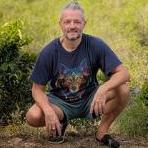
Have one mask myself. Picked it up in Jamaica in 2012. It's a souvenir, not a ritual mask. It represents the start of my transformation. It was the start where I changed my life around. That's me with the creator Joel. Taken near James Bond beach, het had his little hut and made souvenirs.
-
@Nemra Thank you for sharing. Yeah, I gave up on trying to optimize and be a perfectly healthy human being after going deeper and deeper into my tripping and transformation. I am much more accepting of my disabilities and chronic health issues; realizing God will not miraculously, permanently erase and heal my finite human conditions. I can do my best to manage it. I am no longer equating perfect human health to being conscious of God. Is Julian Michaels conscious of what God is? God doesn’t need you to be a perfect human. I feel much more at peace by not rejecting suffering.
-
Leo you told us that you will have transformation caught on camera. What happened to your promise?
-
The goodness of the Paradise of Love is beyond anything I could have imagined. When you imagine the most beautiful world possible for yourself and for every human being, the Paradise of Love is infinitely more magnificent than that. When I first awakened into this Paradise of Love, the greatest transformation wasn't how the world around me looked, but how I felt. The most profound change was the awakening of life force. It felt as though a dormant power had come alive within me. My body became stronger, lighter, more flexible, and more alive than I had ever known it to be. Movement became effortless. Creativity flowed naturally. I felt magnetic, intuitive, charismatic, fearless, and deeply connected to life itself. For the first time, I understood why so many spiritual traditions speak about Divine power awakening within a human being. My surroundings transformed as well. The world became a shimmering tapestry of sacred geometry, vibrant colors, and Divine beauty. One of the most striking visions, especially outdoors during the daytime, was the presence of the wolf. Everywhere I looked, reality appeared woven together from countless geometric wolf faces quietly watching me. As my journey continued, I gradually came to understand the wolf as my Divine Mother Wolf, a loving guide who had been walking beside me all along. At times, it felt as though I were meeting my true self for the very first time. I found myself fascinated, amazed, and sometimes overwhelmed by my own beauty, not physical beauty, but the beauty of simply being alive. In this state of Love, relating to people became effortless. Conversations flowed naturally. I could easily connect with strangers, make friends within minutes, and feel genuine compassion for everyone I met. It wasn't manipulation, charisma techniques, NLP, or social psychology. It came from sincere love and genuine care. I felt as though I could read people's emotions through an invisible current of life that connected all of us. Movement itself became a form of meditation. My body seemed guided by an intelligence far beyond conscious thought. Martial arts movements arose spontaneously, flowing directly from intuition rather than technique. They carried the elegance of nature itself. Sometimes I moved like flowing water, sometimes like the wind, and at other times like the animals so often depicted in ancient martial arts traditions: the serpent, the monkey, the tiger, the crane, dragon, and the leopard. Dance also became something entirely different. While dancing to the icaros during ceremonies, it felt as though my master plant dietas themselves were choreographing my movements. Every gesture emerged effortlessly, with a beauty and harmony unlike anything I had encountered before. The movements felt ancient, intelligent, and deeply alive. My awareness expanded in extraordinary ways. During one heroic magic mushroom journey at a music festival, I found myself moving effortlessly through a dense crowd of dancing people without bumping into anyone. It felt as though I intuitively knew where every person's body would move before they moved. Dancing with another person became less like leading or following and more like two streams of water naturally flowing together. There were moments that still remain difficult for me to explain. Once, outside a maloka during an Ayahuasca ceremony, a much larger man suddenly charged toward me because he believed I had been too loud during the ceremony. In that instant, everything slowed down. My body responded on its own. I moved with incredible speed and precision, and he stumbled backward several feet without either of us making meaningful physical contact. Even today, I struggle to fully understand what happened in that moment. During many ceremonies, I experienced an overwhelming sense that obstacles simply did not exist. I knew, with complete certainty, that anything could be overcome through Love. Nothing felt impossible. One night, in the darkness of a maloka, I received powerful visions during a master plant dieta. Before me appeared immense luminous symbols resembling a mysterious combination of nature, royalty, and playing cards. They shimmered with immense beauty and power. I felt their presence as protectors, teachers, and allies. Although I could feel their extraordinary wisdom, I also knew I was not yet ready to fully understand or embody what they were showing me. Music also changed completely. On several occasions, while deeply connected to the medicine, I began hearing songs of indescribable beauty. They resembled master plant icaros, yet seemed to come from somewhere beyond human creativity. It felt as though I wasn't composing them. I was simply listening. One of the most beautiful aspects of the Paradise of Love was the complete appreciation of the present moment. Every moment became infinitely precious. Every tree, every face, every conversation, every ray of sunlight seemed worthy of complete attention. At festivals, this sometimes became almost overwhelming because there was simply too much beauty to explore, too much creativity to experience, and too much life to fall in love with. During some ceremonies, I experienced something even more astonishing. I was shown that all of creation was the Kingdom of Love. In those moments, I experienced myself as the King of Love, the ruler of this infinite kingdom, not in the ordinary sense of power or authority, but as an expression of the Divine manifesting itself through human form. I saw my family and many other people as radiant beings beyond all suffering, shining with extraordinary beauty, freedom, and love. In several ceremonies, I also experienced what felt like healing energy flowing through my hands. At times, I felt as though I had become an embodiment of the Christ consciousness itself, a living expression of unconditional Love. After experiencing these glimpses of the Paradise of Love over many ceremonies, one question remained. How do I embody it? Deep within, I sensed that merely visiting Paradise would never be enough. If I truly wanted to embody it permanently, I would first have to walk through something unimaginably difficult. I had been shown Paradise. Now I would have to earn my way home.
-
Any thoughts on this? Ive been a big fan for a long time of both Jung and psychedelics. Why Jung Was Skeptical About Psychedelics 1. Regression into Primitive Layers Jung worried that psychedelics could thrust people too quickly into archaic or primitive layers of the psyche. Instead of growth, this might feel like a regression — an overwhelming flood of imagery that leaves someone more confused than before. 2. The Risk of Inflation Jung also warned about inflation, when the ego identifies with powerful archetypal content and loses touch with reality. Under psychedelics, visions can feel like divine truth. But without grounding, this can lead to grandiosity, disconnection, or even collapse. 3. The Moral Burden of Knowledge For Jung, knowing more of the unconscious wasn’t always a gift — it was a responsibility. If someone accessed deep truths without the conscious maturity to hold them, that knowledge could weigh heavily, destabilize, or even mislead. 4. No Shortcut to Individuation Jung’s whole therapeutic model was built on individuation — the slow, lifelong process of becoming whole. He felt psychedelics might offer a glimpse of the depths, but not the path to walk them. For him, real transformation required time, patience, and an ongoing relationship with the unconscious. Source: https://www.saraouimette.com/blog/2025/9/15/what-did-carl-jung-say-about-psychedelics
-
I just read a super old note from 5 years ago. It was in a transformation mastery course from Julien Blanc. What a waste of money back in the day, but I was desperate to get out of my situation. What I can take away from it was how much more physical life was in school. An athletic classmate had automatically more statues and I looked up to them. And also trying to be nice and lovely seemed to be a survival strategy back in the day. Oh men oh men it hurts to read this.. No wonder I went to the gym though and my story is probably as un-unique as it gets.
-
The retro video game convention is done and It went well. despite me feeling super exhausted, mentally drained and anxious beforehand! Here’s all the details if you’re interested!: I got a quick glance at the AVGN and then left satisfied. Afterwards, I ate a $14 pizza that tasted like Complete Cardboard Bullshit, but I was so hungry and ate most of it anyway. The view outside where I was eating was *Muah*, so that saved the experience. Then, back inside, my childhood all-time favorite Pokémon WON the costume contest! She was AWW-mazing! Took a traditionally masculine mon and completely recontextualized it to be Super Fem and Beautiful! I loved the originality, attention to detail, and everything was hand designed from scratch. She even did a live evolution / transformation from Ivysaur to Venusaur live on stage. Can’t even put it into words. The audience went crazy for her to win, even before the judges announced her as the official winner. Finally at the end of the day, the voice actor of Super Mario and Luigi and a bunch of other characters did a Q&A panel. He’s in his 70s now and gave a lot of wise life purpose advice to the audience like a wise old sage. Mama-Mia!
-
Many men, even on this forum, STILL DO NOT INTERNALISE THE POWER OF THIER LANGUAGE & MINDSET Leo has, in other words and framing, gone over this with TENS of different videos, i have also discussed it at length But the theoretical part is only 1 half, you then have to EMBODY (work your ass off and apply it) IT FOR YEARS (Assuming u didn't have a rare perfect childhood, with an incredible father figure, environment ect.. and this is all done unconsciously) Positive thinking Visualization Self Talk Affirmations Goal Setting Mindset Beliefs, limiting beliefs, Not needing validation Being Uninhibited - low inhibition men, shameless, unapolagetic Not giving a fuck what people think Saying and doing what you want How u interpret reality Overthinking, OCD, anxiety within your body, lack of presence Authenticity, speaking with your chest, vocal tonality, eye contact All of these things can and should be msatered individually, and worked on for multiple years, EVERY SINGLE DAY BUT There is a core connector that needs to be unraveled That is that, many of these things are just extentions of a few core foundations The core foundation(S), once its truly mastered, everything else becomes a byproduct, or become smuch smoother to emoby and integrate And the core of it is subsconsious reprogarmming, core beliefs about yourself and your value Another foundation is the linguistic programming and brainwashing within your mind, which creates these core beliefs Another foundation is positive thinking - but much more specifically, is your mind, constantly, permanently, instantly, orientated towards solutions, success, the future (or enjoying the present), growth, transformation, dreaming, refining, improving, where you will be, how amazing your life will be ect.. and how deep and subconscious, instant and effortless this mechanism is And again the foundation to achieving this is affrimations, visualizations, self talk, but it sounds way easier than it is, easy in concept, not academic, but who actually drills it in, day and night, for years? who the fuck even does that Then, this becomes so deep and unconcious that when you talk, speak write on a forum, the actual emotionality of your language changes, i still see people on this forum casually mention how they're "absolutely terrifed of ... (insert mundane petty thing that really is just a linguistic reasoning shaped by the deep subconcious anxiety, insecurity, envy. desperation and inner inadequacy within the cells of there body, because they never truly repgrommaed themselves, they never went all the way, they just dabbled in self help as a fad, like everyone else, where is the god level of fearlessness, confidence, masculinity when a guy is fucking terrified of a basic ability of a 130 pound woman (an ability which, he could very simply learn thorugh work and struggle for a few months and benefit from inmediately for the remaining entirety of hisl life)? its pathetic, but if we're all honest, we are all pathetic and mediocre, and this post is how you rise above mediocrity, only when applied, daily, day and night, for years. This is just an honest reminder to myself I got some results but i still mostly dabbled with it all in practice I did not TRULY master it on a deep, subconcious level, to the level that lionel messi rapidly makes decisions, positions his body, knows where the next pass is, already knows the next 3 steps ahead of the defender, to the level of zidannes first touch, effortless, permanently ingrained, unstoppable, never bends or waivers, true mastery.
-

Jirh replied to Carl-Richard's topic in Spirituality, Consciousness, Awakening, Mysticism, Meditation, God
If there was a psychic person with real psychic abilities, they would be the most famous person alive. Why? Because they would be able to showcase their powers on YouTube and IG and everywhere online. We only need one person in order to prove pre-rational psychic abilities. But that one person doesn't exist. Spiritual awakening is a private inner experience/transformation. It's not a claim about external reality. It's a deep understanding of it. -
For sure! Ego death is cool but scary. I recommend looking up grounding mechanisms before you go deeper into that path, they are ignored a bit here but important. Trans people are interesting, I had a trans girl I was working with almost a decade ago now but I didn't really have the balls(no pun intended) to go through with it at that time so we were just friends and sexted a bit but ended at that. It was interesting because at first she presented like a dude and had a guy name and then slowly transitionned and started taking hormones so I could see the transformation. It's cool I'm a big fan of boobs so the fact that one can take hormones and grow them clearly is a sign of great scientific culmination by the human race. Big w.
-
From the scraping, somebody should just generate an RSS feed file with the full posts embedded and with the OCR idea in a free static file hosting service like Cloud flare. So the user can just use his favorite RSS reader. There are probably some good ones that allows for full text search, if not that can be easily be done from the RSS feed file. This way we don't have to waste time maintaining more custom code than necessary, we won't be running multiple of those bots accessing and creating their own databases, and it will work in all platforms and provide the real-time update abstraction from RSS feed readers. If that's not enough, we can just write our own custom format if RSS happens to have some major limitation like maximum number of posts. Extracting the posts into their own respective HTML files cleaned and properly tagged for automation before doing any further format transformation should be the first step of this scraping pipeline, that will guarantee that it will preserve all the original features on the post, like the youtube embeds and whatever he might have included there. The major issue I believe would be the vimeo embeds, I believe leo configured them to not run outside of actualized.org. It has to be checked. What Claude Code gave there wouldn't handle if it's taking just the text of the posts and tossing away the original HTML. HTML already has a tag to add the text description of images that is used for accesability, that would be the correct way to extracting HTML and using OCR to embed back into the image the text, and then the later stages of the pipeline uses that. For searching quick right now just use on google: the tag "site:" followed by the address to search there. site:https://www.actualized.org/insights
-
This was an ICHING reading I got yesterday. Line 1. If the wanderer busies himself with trivial things, he draws down misfortune upon himself. This line can call attention to a fate a person has created by busying himself with concerns of the collective ego. Among such trivial concerns are judgments based on the human-centered view of the universe: about justice, crime, and the supposed guilt of others about supposed rights and privileges attributing catastrophes to weather, or Nature, when they have been the result of expectations projected onto Nature gossip and idle curiosity about others' relationships, including the intimate affairs of animals blaming one's fate on an outside cause, rather than seeing its cause in oneself watching whether others are conforming properly to the moral and behavioral standards (the oughts and musts) of the collective ego preoccupying oneself with things afar rather than with what lies directly in front of one 56. The Wanderer • dismissing things of real significance (such as money) as mun-dane, in favor of working on a spiritual self-image. When a person does not understand the Cosmic Way and has created a fate due to his incorrect views, the ego in him will seek to put the blame on something or someone else, the Cosmos, life, Nature, or even his true self, rather than having the ego itself recognized as the cause; in addition, it may put a heavy burden of guilt upon the person. He needs to catch onto this tactic of the ego before it plunges him into yet another fate. (See p. 539, Freeing Yourself from Mistaken Ideas and Beliefs, p. 542, Freeing Yourself from a fate, and p. 551, Deprogramming Guilt.) The line can also refer to a person who feels guilty for possessing something while others have nothing. Possibly he has been taught as a child to take on guilt for the starving children in the world, human maltreatment of animals, trees, the earth, etc. It is one thing to care about all these things, and act responsibly in regard to them, but it is another to allow guilt to drive one to fulfill the image of the "compassionate person." Striving to fulfil this self-image keeps the person from saying the inner No to wrong conditions and their causes, and from asking for help from the Helpers, which are truly able to correct these conditions through transformation.
-
Look, everyone wondering why Leo refuses to admit his alien transformation error, it's very simple. Most people can say "I was in a state of grandiose delusion". But Leo cannot admit this to himself, therefore he cannot admit it to you. And he never will. You will never get an admission because: "'Grandiose delusion' is the two words that, said sincerely, collapse the idealized self into the despised self in one move — and the entire architecture exists to make those two words unsayable. So he says everything around them, forever, because the one thing the expansive solution cannot do is name itself." Underneath the grandiosity is precisely the terror of being ordinary, small, self-deceived — the average human who fools himself and can't tell. "I was in grandiose delusion" doesn't just lower him to average. It drops him straight into the despised self the entire construction exists to escape. It's not a step down; it's a fall through the trapdoor the whole edifice was built to cover." - Karen Horney, The Expansive solution (Neurosis and Human Growth: The Struggle Toward Self-Realization)
-
Leo, banning people and unmodding mods for rightfully holding you accountable and questioning your outrageous claims will not make the problem go away. You have conveniently been dodging the question that many are looking for the answer to: Where is the alien transformation video? You said that the biggest obstacle to producing the video was finding a camera that would record your face transforming into a colorful alien god. And what is the obstacle now?
-
That's different from recording alien transformation. Sign me up! I'm all ears.
-

OBEler replied to Brandon L's topic in Spirituality, Consciousness, Awakening, Mysticism, Meditation, God
Ok it seems you can inject it. Chatgpt: Yes. In India, there was a historical connection between spirituality, alchemy, and preparations containing metals. The traditions most relevant here are Rasaśāstra and Rasāyana. Gold and other metals were repeatedly “purified,” ground, and heated through complex procedures. The resulting gold preparation is called Swarna or Suvarna Bhasma. It was taken orally in very small quantities, often with honey or ghee—not injected. One related practice is Swarna Prashana, which was traditionally associated with improved memory, intelligence, vitality, immunity, and longevity. The spiritual background sometimes went far beyond ordinary medicine. Certain Indian alchemical schools aimed to perfect or rejuvenate the body, or even create an enduring “divine body” that could support meditation, extraordinary abilities, and ultimately liberation. However, the most important alchemical substance in many of these traditions was usually mercury, not gold alone. The key distinction is: The goal was usually gradual physical and spiritual transformation, longevity, and mental clarity—not an immediate psychedelic or mystical “gold trip.” Modern studies have confirmed that some Swarna Bhasma preparations contain very small or nanostructured gold particles, and that gold can sometimes be detected in the body after oral use. However, this does not prove that it improves the nervous system, intelligence, cognition, or spiritual awareness. Current clinical evidence is insufficient to establish such effects reliably. “Traditionally prepared” also does not automatically mean safe. The composition and quality of these products can vary significantly, and some Ayurvedic products have contained harmful amounts of lead, mercury, or arsenic. There is no well-documented Indian spiritual tradition of injecting gold. -
@Olaf Good self observations you made! You noticed the dividend it payed back in terms of energy. More conscious awareness,,, Higher degree of being,,, Understanding human behavior better @UpperMaster Excellent commentary and to the point. A trap many people fall into, not to mention actualizers of denying their own negative feelings. Repression grows the shadow. In the fourth way work this is called the second conscious shock. Turning a negative experience into a positive one. Usually accomplished in part by "holding one's tongue", as the saying goes. I'll give an example that happened in my past. I was trading into a new Subaru. When the salesman told me the offer on my old Hyundai. The adrenaline hit. I was angry and he could see it. I hadn't said anything yet and was stewing,,,, As is said in the Work, It was hot in the kitchen! After several seconds had passed. He said, "Please, we shouldn't have to become antagonistic in what we're trying to accomplish". With what he said. It made me see myself and the ridiculous way that I could have spoken something in anger that would have knocked a lot of energy out of me. If you can kind of read into that situation,,, I actually smiled and later on, complemented him for how he handled my potential anger on hearing their offer for my trade in. Speaking in anger is so easy to do and so difficult to not do. To not deny one's feelings but to not let the passion of anger turn one into an "unguided projectile" or an "unguided Golum" as one of my favorite Fourth Way teachers says. some notes- Like Dislike Understanding the Second Conscious Shock in the Fourth Way In the Fourth Way teachings of P.D. Ouspensky, the first and second conscious shocks are key moments in the process of self-remembering and transformation. They are not random events but intentional, often difficult experiences designed to break habitual patterns and force awareness. What the Second Conscious Shock Is The second conscious shock typically follows the first conscious shock, which is the moment of sudden realization that you are acting mechanically or out of habit. The second shock is the experience of defeat or the tension between desire and inevitability — the moment when you confront the reality of your own mechanicalness and the lack of proper energy fourthwaytoday.org. It is often described as: A tension between the fire of your desire to remain present and the chill of the inevitable fall into old patterns fourthwaytoday.org. A sacred direction in the octave of development, where the process of defeat becomes a catalyst for transformation fourthwaytoday.org. A psychic death experience — the “life” of your habitual self is temporarily extinguished, creating a flatness or stillness that is not dullness, but a deep sense of peace and “all-rightness” gurdjiefflegacy.org. How It Works with the First Shock Ouspensky explains that the first shock is the recognition of mechanicalness; the second shock is the confrontation with the consequences of that mechanicalness. Together, they form a synergy — the first shock creates the awareness, the second shock deepens the transformation YouTube. The second shock is not just about discomfort; it is about sacred direction — a moment when the process of defeat aligns with a higher purpose, leading to a shift in energy and awareness fourthwaytoday.org. Purpose and Outcome The second conscious shock: Breaks habitual patterns by forcing a confrontation with the self. Evokes transformation rather than just resistance. Aligns the self with higher functions by moving beyond mechanical reaction into conscious, intentional action. Can lead to a stable, inner peace and a deeper understanding of the temporal and eternal aspects of life gurdjiefflegacy.org. Practical Context In Gurdjieff’s groups, such shocks might be triggered by: Sudden commands (“Stop!”) that interrupt habitual movement to-be-able.blogspot.com. Intentional labor or discomfort that forces presence to-be-able.blogspot.com. Moments of self-observation where you realize you are acting without awareness gurdjiefflegacy.org. The goal is to stop the expression of negative emotions and to change attitudes so that the shock becomes a stepping stone toward higher consciousness SelfDefinition.Org. In short: The second conscious shock is the moment when the realization of mechanicalness meets the reality of its consequences, creating a transformative “defeat” that, when integrated, moves you toward higher states of being in the Fourth Way.




(1).thumb.jpg.bd60b1d169b2d3cf1f71c8df235d0e65.jpg)




(1).thumb.jpg.76cbf875ce005a520c2c0bccb9d8fd14.jpg)