Search the Community
Showing results for 'sentience'.
Found 505 results
-
Except you probably wouldn't evaluate just based on sentience, but based on outcome as well and maybe based on other things as well. The ranking of sentience is very problematic in and of itself, but regardless of that, what if you would kill all those shripms you could directly save 10000 humans (because you could give them food). Or what if that whale is the last pregnant one and the only one who could save its own species from completely dying off? Do you consider things like that in your evaluation or you would completely ignore those? 100 million dogs vs 1 human. How do you decide this one? What if it is guaranteed that the killing process is painless and instant?
-
I think so. A higher quantity of low quality sentience will at some point outgrow a lower quantity but high quality sentience. Just like 10x 10€ equals 1x 100€. But I guess there are some metaphysical assumptions that I made there. Because 10x 10€ is not 100€ because it’s not getting duplicated. It stays 10x 10€ forever in a sense. The quality that the wale experiences will never be reached.
-
But then can you really just add these “sentience units” to compare whether one group of organisms has more “sentience units” than another? The shrimp just aren’t capable of suffering like the whale is. It’s more like, what’s less ethical: pinch every human on their weenus or kill the whale? I feel like from a certain perspective, there are no amount of ants that I would not be willing to kill to save the life of a human, much less a corgi puppy. Even if their sentience is .000001 and a corgi’s is 1000, I’d kill all the ants regardless. Of course, that would bring a whole ‘nother host of problems, but the direct suffering as a result of killing the ants vs the corgis would make me choose the ants. Of course I’m biased here cause I like dogs and don’t like ant bites. Also, my reasoning kinda worries me for what an ET civilization / super-intelligence may think about us…
-
Let’s say you can rank sentience of a living organism. A shrimp has let’s say a sentience of 3 because it’s a rather simple creature. A wale has a sentience of let’s say 400 because it’s a way more evolved creature. If sentience is the determining factor for the right not to get killed then it’s 400:3 = 133. One wale is worth 133 shrimps. In this hypothetical example at least. My point was that in order for the wale to have a higher right to live then shrimps the wale must be so incredible sentient or the shrimps so incredible unsentient (around 0) because it’s 1 vs 800000 for the same meat mass.
-
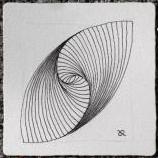 I compared their weight. Of course that not all actual meat mass but it's a rough estimation of what you are getting. For the meat of one blue whale you need about 800000 shrimps. We sometimes compare the sentience of living beings to estimate how ethical it is to kill them. The more sentient a being is the less ethical it is to kill it. But weight is an important factor as well. Its quantity x quality. Shrimps would pretty much have zero sentience in order to be more ethical to kill compared to Wales because you need 800000 of them to get the same meat (I am not including other environmental factors) For chickens to cows its like 1:500 as well its crazy. Are there some seriously dumb and fat animals? Maybe crocodiles?
 -
God is a sentient (Sentience meaning God has feelings, feelings is not a human quality but a quality of God) love and truth simulator that spontaneously manifests itself in the most loving truthful way possible in every moment, this is why every moment is perfect because what is more perfect than love and truth?
-
State Of Consciousness Is Everything State of consciousness is everything: Reality consists of one thing, consciousness, and this consciousness takes different states. No object can exist outside of consciousness. All physical objects exist within consciousness and are part of whatever state of consciousness you're in. No matter what you're experiencing, you're in some state of consciousness, always. How many states of consciousness are there? Dreaming. Waking life. Being drunk or high on a drug. Sleepy or dead tired. Sickness, cold, flu. Emotions: anger, rage, sadness, depression, heartbreak. Sexual excitement. There aren't clear boundaries between these states, consciousness is fluid. > Categories are human projections, there's Infinite number of states of consciousness! A state of consciousness is composed of figments of consciousness, as in figments of imagination. Reality is made out of figments of consciousness, which make up different states. The state determines how the figments combine together and flow. Figments of consciousness examples: Snickers candy bar > Not made of atoms, energy, not neurons, or computer simulation, but a figment within consciousness. > When dreaming at night, the building block of a dream isn't atoms, but the different figments of your mind: > People, places, and occurrences within the dream. Think of reality as a dream machine. In such a machine you don't need atoms, energy, or mathematics, all you need is the actual elements of the thing you're dreaming. (Snickers candy bar, human body, table, grocery store aisle, money) A movie director isn't thinking in terms of atoms but in terms of elements needed in the movie. Yellow rubber duckie What it means to say that something exists is to say that consciousness is imagining a yellow rubber duckie. It is held by consciousness. Consciousness is not inside a physical universe. The physical universe is inside of consciousness, as a figment of consciousness. Look around and notice that you have an idea of the physical universe This present moment is also a figment of consciousness. The smell of a skunk, A gallon of gasoline Braces on a child's teeth A used condom An axe to the skull 1.29843 bitcoin in a bitcoin wallet Albert Einstein, every person, including Leo > Homosapiens, mammals, planets, cells, organs, molecules, DNA, proteins, and atoms, are all figments that consciousness has woven together to create the larger figment called Albert Einstein. (Not your idea of Albert Einstein, but the actual Albert Einstein your idea is pointing to.) Materialistic paradigm is the idea that reality is built from the bottom up. (The assumption that reality is built out of smaller elements which is can be reduced to) Consciousness works top down, not bottom up. Consciousness can just imagine Albert Einstein. Consider the paradigm shift that there wasn't a Big Bang leading to a snickers candy bar. Reality can simply spawn a snickers candy bar from scratch as a figment of consciousness. The Big Bang, molecules, and how the bar was created is conceptual and not direct experience. Scientist's paradigm is backwards. Discover this for yourself by observing direct experience. Lego pirate ship Racist tweet by Donald Trump An Up quark Teen selling drugs on the sidewalk in a bad neighborhood Darth Vader The game world of Skyrim The entire Christian faith and mythos Christian hell with fire and pitchforks An Atheist arguing that God does not exist A role of soft Charmin toilet paper The entire history of America Intel i9 12th generation CPU A swamp in Louisiana Ancient Egyptian God Osiris Archangel Michael Tesla Model S being assembled in a factory The entire state of California The actual city of New York as it was in the year 1950 > You can infinitely subdivide any figment of consciousness into an infinite number of sub-figments of consciousness. > To create finer resolution figments to fill in the details like a fractal zoom. > You can keep imagining further figments forever = Infinite consciousness The pacific ocean A melting ice cream cone in a child's hand A mosquito bite The concept of hierarchy or capitalism The category of insect Disney Land 5-Meo-DMT A memory of you going to grade school and learning the multiplication tables A helicopter A stomach ache A pina colada The feeling of intense anger A sexist joke No one figment is more fundamental than any other figment, therefore, you can't say that reality is made out of certain kinds of consciousness. Reality is as much made out of a pina colada, as it is a sexist joke, as it is Disney land, as it is a helicopter. Why are atoms, quarks, energy, and mathematics any less preposterous than a sexist joke, or a pina colada? > Substrate is relative this frees your mind up and turns it Infinite. One substrate isn't more fundamental than any other. If reality has the power to create an electron, it has the power to create a pina colada. Both are figments of consciousness. Now think of your entire life as a whole. That too, is a figment of consciousness. Woven together out of strands of sub-figments of consciousness. The grade school memory is one strand of the larger yarn that is your whole life, Being born in this city, country, date, is a figment of consciousness. And when you say you're going to die on your deathbed, is also a figment of consciousness. Even your nightly dreams are figments of consciousness. Try to grasp experientially what a figment of consciousness is: (Either while you're meditating. Right now. Or on a psychedelic.) Try to grasp that all the material objects around you are figments of consciousness. Hold your phone in your hand and try to get that it isn't a material object made out of atoms. That phone is a figment of consciousness, YOUR consciousness. It's qualitative and whole, a chunk of consciousness. It's not built from the bottom up, It's dreamed up from the top down! Consciousness is unbounded: Figments of consciousness have no size, no shape, no bounds, and no ground. There are no limits, it can be as tiny as an ant, or as large as the entire galaxy. It makes no difference because consciousness is infinite in all directions, it's scale invariant. The way you get a sense of scale is by comparing one figment of consciousness to another figment of consciousness. An additional assumption of materialism is that reality is concrete. One thing vs another thing. But Reality is not limited to that, it can be abstract and vague. Concreteness is a bias. Consciousness is Infinity The sum total of every possible figment of consciousness. = Nothing Consciousness/Reality is unlimited and holistic. It can weave together any figments it wants to create a cohesive "life" or "state". It happens top down not bottom up, therefore it's irreducible. Why does reality feel so real? Your sense of physical reality and sanity are intertwined. Physical reality is how you define sanity. Your whole life is about surviving within the dream that you're dreaming, And anything that shakes its foundations terrifies you. All that mental illness and insanity are is a loose state of consciousness Material physical reality is just a very coherent well woven together collection of figments of consciousness. Everything is absolute reality: States and Figments of consciousness are not merely personal experiences, happening inside of a brain, a body, a physical universe or a computer. Figments of consciousness are absolute. Red is absolutely red. Mickey mouse is absolutely mickey mouse. It's self-identical. Everything is absolute reality. Brain is a figment of consciousness Physical universe is a figment of consciousness Atoms are a figment of consciousness Science is a figment of consciousness History is a figment of consciousness Computation is a figment of consciousness You're trying to use all of these and more figments of consciousness to somehow ground the absolute and relativize it. Trying to turn it into a field of perceptions that you, a biological creature who's made out of matter sitting on a planet earth is having situated somewhere in history of the universe. To awaken cut all of these figments, which are tightly woven together. Like a sweater knitted out of one yarn. Untangle the whole sweater to realize it's just one piece of yarn. Reality = Mind A mind unlike material is fluid and can work holistically top down Material has to be made out of simple elements and has to work bottom-up -> material can't be intelligent Mind can have sentience and intelligence (materialism vs idealism) Infinite intelligence can dumb itself down infinitely low into a door knob. The dumbness of material objects is an illusion. Mind is also capable of comprehension, a material system isn't. Mind is absolute Mind is creative Mind has will Think of reality as an infinite field of pixels all communicating with each other and coordinating intelligently from the top down. You're inside of an infinite resolution field of consciousness. Your hand is a figment of consciousness "Dial/switch of awakening" leads to remembrance and forgetfulness. In this state of consciousness, the dial of forgetfulness is all the way up. You've forgotten how you literally constructed the planet earth! Flip the switch and you remember how you constructed planet earth. Consciousness has the ability to hide things from itself at will. You can remember how you imagined and created your own birth. Thinking, modeling, and conceptualizing cannot substitute for states of consciousness. These things only make sense from very high states of consciousness. All of that is only relative to a certain state of consciousness. It requires going meta on that frame (the material state.) Imagine what a million IQ Mind could think. You can access this intelligence, this multidimensional way of "hyper-thinking" Here shutting off the mind is no longer the goal. Some states of consciousness can't even be remembered or explained to oneself from this base state. Like taking an HD 4k image and compressing it down into a 6x6 pixel image. It's a lack of bandwidth problem. Spiritual work opens up that bandwidth. Your current state of consciousness completely determines the parameters of your experience. What you're able to think, communicate, understand, How you emote, how you feel. What you think is right and wrong, sane or insane, logical or irrational, possible or impossible. And you cannot imagine or think beyond the state of consciousness you're in right now without expanding it. It can contract too. You cannot avoid being in some state of consciousness. States have trade-offs and pros and cons In some states you can't even read a book, talk, walk, think, or see a material world. (like a finite cup of water) This is why humans have a relatively low state of consciousness. Impossibility is a function of your state of consciousness. And at the highest state of consciousness, there's infinite possibility! It's God mode. Two kinds of changing your state of consciousness: Temporary state change Permanent change to the baseline state Both have their utility, not one or the other! Changing your state of consciousness is the nr 1 most significant change you can make in life. Science, rationality, skepticism, thinking, and physicality, exist only in certain states of consciousness: Birth and death only exist in certain states of consciousness Modern science itself is a state of consciousness! There's no best or invalid state of consciousness. If your desire is to understand the entire universe, higher states are better. If you desire to do normal human stuff while maintaining sanity, high states are bad for you. Spirituality basically boils down to changing your state of consciousness. Without it that turns into religion. Most people have never experienced a high mystical state of consciousness. This is why there's so much confusion about religion and the nature of reality. We're living in the dark ages. Changing your state of consciousness can be scary, threatening, and dangerous. It pulls the rug out from under you, dematerializes reality, and can feel like insanity. Can also be very isolating and lonely, it feels like nobody understands you. At the highest level, there ceases to be an "other" whom you could validate these ideas against because it all boils down to your own consciousness. Methods: Meditation, concentration, vipassana, do nothing technique, being present, contemplation combined with intense concentration, kriya yoga, chanting and mantras as a serious concentration practice, shamanic breathing, psychedelics, herbs, drugs, visualization, prayer, shaktipat, dark room retreats, astral projection, lucid dreaming, vision quests, extreme suffering, danger and pain, being out in nature, radical experiences like travel or adventure. The function of psychedelics is to show how consciousness changes and how fluid it is. State of consciousness determines what you can do. Mystics can do impossible seeming stuff: paranormal abilities, like clairvoyance and telepathy. What is God? The highest state of consciousness. But God is only self-aware of itself as God from certain high awakened states of consciousness. Even though all states are God, not all states are aware that they are God. Enlightenment is a state of consciousness: It could be a temporary or a permanent state, but it is a state. There's not a single awakened state, there are hundreds of them. Not an on-off switch but a volume knob. There are omniscient states of consciousness from which you can be conscious how you created all of reality and how you created your life. Why do humans disagree with each other so much about reality, seemingly believing crazy things? They're in different states of consciousness But what is consciousness? It's impossible to say because it's Infinite, unbounded, Absolute, more fundamental than language, and beyond your current state of consciousness. Where did consciousness come from? "Where" and "coming from" are figments of consciousness, it's eternal and always existed. "Time" is another figment of consciousness. Is God a figment of consciousness? God IS consciousness. God is all possible figments. God is meta. God is You. You are consciousness dreaming up various figments. One of which is the biographical, biological human self that's born and going to die. Safety mechanism: doublecheck everything for yourself, it's a messy process
-
State Of Consciousness Is Everything https://youtu.be/2u5M6tDc5TE State of consciousness is everything and is the fundamental universal rule Reality consists of one thing: consciousness, which takes different states Objects do not exist outside of consciousness; they are part of whatever state of consciousness you are in Examples of different states of consciousness include dreaming, being drunk or high on drugs, being tired or sick, being in a meditative state, and being in a hypnotic state The brain is like a radio that can tune into different states of consciousness, and the body follows the brain in experiencing those states It is possible to intentionally shift one's state of consciousness through various methods such as meditation, hypnosis, and psychoactive substances The state of consciousness that one is in affects their perception of reality and their experience of life It is possible to become aware of and master one's own state of consciousness, leading to greater control over one's experience of reality and greater spiritual growth. The concept of consciousness is universal and not tied to a physical body or neural network The physical universe is a figment of consciousness, not the other way around The concept of a physical universe is an idea in the mind, and the actual physical universe is also a figment of consciousness Every object and person, including Albert Einstein and the speaker, is a figment of consciousness Consciousness weaves together "figments" or strands of information to create larger concepts or ideas This process of weaving figments together can be repeated infinitely, creating nested layers of information The concept of consciousness is difficult to grasp and understand fully DMT is a figment of consciousness Memories, helicopters, stomach aches, pina coladas, and intense anger are all figments of consciousness The idea that reality is made of certain kinds of figments of consciousness is incorrect One figment is not more fundamental than any other figment Reality is made of as much a pina colada as it is a sexist joke or Disneyland or a helicopter The relativity of substrate means that one building block is no more preposterous than any other The complexity of a pina colada and an electron is identical It doesn't matter where on the infinite zoom scale you are, some things are not easier or harder for reality to create The idea that reality is made of small, fundamental building blocks is a human idea and not a fact Reality is infinite and cannot be broken down into fundamental building blocks Reality is not made of atoms or quarks or energy or mathematics Reality is not made of anything Reality is not a thing that can be made of anything Reality is not a thing at all Reality is not even a concept Reality is infinite and boundless Reality is not even a "place" Reality is not even a "where" Reality is not even a "what" Reality is not even a "how" Reality is not even a "when" Reality is not even a "who" Reality is not even a "why" Reality is not even a "which" Reality is not even a "whose" Reality is not even a "if" Reality is not even a "then" The speaker believes that consciousness is irreducible and infinite Consciousness is made up of every possible figment of consciousness The speaker suggests that understanding consciousness requires a deep awakening and may require one to lose their sanity The speaker believes that attempting to understand consciousness using scientific methods will not be successful The speaker suggests that understanding consciousness requires grasping it from the top down, not the bottom up The speaker believes that inquiring into the nature of reality, oneself, and consciousness may require one to lose their sanity The speaker believes that the ultimate nature of reality and where it came from is not easily accessible or understandable without losing sanity The speaker suggests that the process of understanding consciousness and reality may involve experiencing altered states of consciousness The speaker believes that traditional methods of learning and education are not sufficient for understanding consciousness and reality The speaker suggests that the ultimate understanding of consciousness and reality may require a personal experience or transformation. Intelligence cannot be created from the bottom up, it must be understood from the top down The material world is not capable of comprehension, only the mind is Material objects, such as the human brain, are not actually material but rather mind masquerading as material The nature of mind is infinite sentience and intelligence High levels of intelligence can feel like insanity to humans Humans may perceive those with high levels of intelligence as otherworldly or supernatural entities The mind has a fundamental capacity for sentience and intelligence The speaker is discussing the relationship between states of consciousness and understanding Thinking, modeling, and conceptualizing cannot substitute for states of consciousness One's current state of consciousness determines what they can understand and communicate to themselves and others The English language is limited in its ability to communicate concepts beyond a narrow, ordinary set of consciousness Spiritual teachers may incorrectly teach that thinking is an obstacle to spirituality and awakening Thinking can expand and become "hyper thinking," a new dimension of intelligence that allows for reasoning and thinking in "hyper-dimensional" ways This hyper thinking is a kind of intelligence that most of humanity does not know exists, and may be similar to what an evolved alien species might possess The importance of raising one's baseline state of consciousness and accessing temporary peaks The mistake of dismissing the value of temporary peaks or solely focusing on raising the baseline The need for both approaches in spiritual development The relativity of states of consciousness and the lack of a "best" or "invalid" state The role of states of consciousness in understanding and experiencing the world The potential downsides of high states of consciousness for certain goals or desires The connection between spirituality and changing one's state of consciousness The potential dangers of spiritual practices and the importance of caution and self-awareness The role of substances in altering states of consciousness and the potential risks and benefits of using them. The speaker discusses ways to raise one's baseline state of consciousness One way is to sit and concentrate for long periods of time without distraction Another way is to practice yoga and intense breathing Psychedelics can also be used to experience higher peaks of consciousness The speaker explains that state of consciousness determines what an individual can do and access Mystics can do seemingly impossible things because they are in different states of consciousness Paranormal abilities and cities are possible from higher states of consciousness Clairvoyance and telepathy are examples of abilities that may be accessed from higher states of consciousness The speaker notes that every living being is in a unique state of consciousness God is the highest state of consciousness, but it is not just one single state Some states of consciousness are "awakened" and allow self-awareness of being God Most people are not in an awakened state, but enlightenment is a state of consciousness that can be temporary or permanent The purpose of the episode is to guide listeners towards higher states of consciousness and to explain why they may not currently have access to certain abilities or experiences The speaker suggests that the ultimate goal is to access omniscience and to be conscious of how one has created their reality and life The speaker encourages listeners to keep an open mind about the possibility of accessing higher states of consciousness and to not give up on their spiritual journey. The speaker is teaching about a subject and is fully immersed in learning and understanding it themselves It is a big responsibility to teach this subject, and it is important to not deceive or lie to the listeners The listeners must also take responsibility and do their own thinking, contemplation, cross-referencing, and practice to ensure they are not misled The speaker recognizes their own limitations and biases, and that they will inevitably make mistakes and have self-deceptions It is important to be aware of and acknowledge the fallibility of all teachers and to critically evaluate what is being taught Spirituality is deeply personal and cannot be outsourced to others; listeners must take responsibility for their own spiritual journey The speaker encourages listeners to be the chief spiritual officer of their own lives and to take charge of their own spirituality.
-
I agree that robots should look like adults , but its just a sex toy , not a living entity it literally has no effect on anyone. Maybe in the future where AI develops sentience then we can open dialogue for AI rights, but then where do you draw the line does a vending machine have rights, your hair dryer, but thats whole another debate
-

Danioover9000 replied to spiritual memes's topic in Society, Politics, Government, Environment, Current Events
@spiritual memes If it can happen in a game, or a god simulation game, it can happen in real life, just with so many factors and different dimensions and other reality bending and breaking stuff. If it is God's will to kill off humans for a better form of sentience and life, then it is so, just like with dinosaurs. Not sure if the next superior species would be silicon based lifeforms, or skme type of Alien from another galaxy. World Box is a pretty decent mobile game that does just that, it empowers you to practice your godly craft, and you get to create your own terrain pixel forms, along with villages and see them grow into civilisations. You can also do cool stuff, like send a meteor strike, or control the weather, even go Tulkien style and include Dwarves, Orks and Elvesand other magical creatures. Real cool game. Buy now before the A.I program deletes us all from existence. -

Someone here replied to Someone here's topic in Spirituality, Consciousness, Awakening, Mysticism, Meditation, God
@Gesundheit2 I obviously cannot prove that stones and bricks do not have experience. But suppose they do not have experience; they exist nonetheless. Therefore, the words "experience" and "existence" are meant differently as far as I'm concerned. I don't really know of anyone who thinks and can justify that experience is an element of existence. . Rocks exist, but we have absolutely no evidence that they experience anything. I'm assuming that "experience" means consciously experience. If it just means "stuff happens to the target of the experience" then, sure, stuff happens to rocks. If we go with that definition, then I'd change my answer to yes. If something exists..if it's a form of matter, located in the Universe..then stuff happens to it, even if only on an sub-atomic level.but only YOU have sentience. -
Someone here replied to Someone here's topic in Spirituality, Consciousness, Awakening, Mysticism, Meditation, God
But you are also philosophizing so you are not escaping this problem. I still stand by my conviction..Believing in something CAN NOT make it a reality any more than giving an inanimate object a name can give it sentience. However, the things you believe DO influence the way you perceive the world. And the way you perceive the world has a huge influence over which parts of reality you’re attentive to vs which parts you ignore. Ie, if you believe that something is real (or possible) you are much more likely to observe evidence about it in reality. Eg. If you believe that Santa is real/possible you will notice things in reality that support (or disprove) your belief; sleigh bells ringing on Christmas Eve, mysterious presents around the Christmas tree, those mysterious presents disappearing when you move out of your parents home -
Very interesting take. I personally believe that machinery isn't capable of consciousness like humans (consciousness, as in sentience and awareness of internal and external existence). I feel like this thread is kinda derailed by the non-dual discussion, because it ultimately doesn't matter what AI is from a non-dual perspective, in my understanding of it at least. The distinction of AI being conscious or not, that is.
-
Science can't understand what consciousness is because Consciousness runs through everything. So you can't get outside of consciousness to explain it from beyond. It goes through everything. It runs through everything through different 'escapes'. Sensation or sentience often seen as some form of 'awareness' or a slight comprehension of the outside world. I beg to differ but still believe consciousness can be an object of supporting inanimate objects as having some form of reality to them, despite that not being the purpose of consciousness. If you hit a rock, in my opinion, it will not be aware that it has been struck, as it has no perceptual system of neurological or even slightly intelligent behaviour. It is just a rock, although as I said consciousness is an omnipresent thing so hypothetically, the atoms that respond could be reacting and therefore being aware to the extent of unintentional and instinctive reactivity. So consciousness runs through everything. Even inanimate objects that seem to have no consciousness but are made of consciousness. And as long as scientists assume that consciousness is something that living beings have it will forever remain a mystery.
-
Danioover9000 replied to bambi's topic in Spirituality, Consciousness, Awakening, Mysticism, Meditation, God
@bambi Great work and animation. Not to dismiss the artificial intelligence's interpretation or the creator's surrendering of authority of contemplating what happens after we die, but I don't think A.I. should be used to find out this type of answer, as the answer has been discovered many times in most spiritual traditions. Even @Leo Gura has discovered what that's like, so why should we obfuscate and let the A.I, just a robot without sentience, answer that? Seems like a cop out. -
 Something profound came about last night in a conversation with my brother-in-law. Thought it would be worth sharing with y’all. He’s the only proper tier 2 thinker I’ve been blessed to know personally and we both agree that I’ve saved him from loneliness and he’s saved me from total insanity through our abstract, philosophical connection. (Keep in mind that he is not God- Realized and I can’t be too blunt with the whole you are God thing haha) Here’s the brief Q&A: His question “When god came into existence, and most likely didn’t even understand fully what itself was, and now continually witnesses the possibilities and strives to understand itself endlessly. As a single piece of that entity striving to understand itself, is everyone’s real purpose just to love and accept themselves and others. Whatever that may be?” My response “I like that a lot, very well worded. I know/perceive God as the principle of infinite intelligence, the only thing capable of properly understanding existence; Since existence is a pure singularity of infinity. I see/feel/experience Love to be The primary tool that God uses to achieve this infinite understanding. This is why I feel Love is so powerful, it is the only thing that a singularity of infinite intelligence decided to use to understand itself perfectly ? ?♾? As though Love is an advanced technology of an unimaginable magnitude, and inconceivably subtle, intricate, and multidimensional. The most advanced levels of love are extremely alien to how humans know and express love, almost like technology from a futuristic planet outside our galaxy Gods main frame of understanding is a nuclear reactor of infinite love, which also implies infinite acceptance of all manifestations of infinity, including all subsets of limited understanding. I am my best self when I can perfectly mirror God‘s Love for the macrocosm through its infinite intelligence with my love for the microcosm through my finite intelligence. The more loving I become the more it is extremely clear that I’ve become a pristine instrument that God can use to achieve pure understanding of the entire human domain, the entire earth fractal of infinity ?” Second response”Also I had a telepathic merging and simultaneous awakening with this actualized guy and his post expresses my life purpose quite well.(I sent him Leo’s recent post of Infinite Alien Love) Almost like Mr. Actualized and I are outgrowths of the same alien intelligence that’s contacting humanity in order to teach it new ways to love and thus new ways to understand themselves and all of existence. He’s more of the brain/vocal cords and I am more of the liver/kidneys.( Of course there are organelle systems within this alien that no human has ever seen before. They are completely unique in their purpose and novel in their function.) He builds towering spires of alien architecture and alien wisdom that humans can look up to for conscious inspiration and amazement. I’m over here underground, installing multidimensional alien plumbing and sewer systems; making sure humanity’s subconscious bullshit gets treated properly and doesn’t flood to the surface. Don’t worry I knew there was no glory in this job when I signed up for it ?Spoiler: the collective healing I have been doing for the past few years is precisely this alien love expressed. It’s so alien that it’s consciously appreciated by only a handful of people in the world at a time. Of course that number is growing quite a bit with our collective awakening. Although this alien love that I try to express seems to require me being struck by lightning to express properly, almost like I’ve learned to absorb and radiate so much of God’s love that it is literally killing me haha (not ego death but actual physical death) but it’s such a beautiful thing that I don’t mind in the slightest. One death to heal the trauma of billions of deaths is just fine in God‘s eyes, he doesn’t mind me taking one for the team haha.” A few additional points to add for forum folks : Do I really believe that Leo and I are part of an alien being sent here to save humanity? Honestly I don’t give a shit and was just having fun talking with a friend. There is no need to claim alien-ness to be special. The Singularity includes infinite alien-ness and infinite similarity. You are both native and alien at the same time and it’s a delicious paradox that will be solved with deeper awakenings. What do I mean by collective healing? We can start by reviewing a book by Chris Bache titled “ LSD and the Mind of the Universe: Diamonds from Heaven.” He speaks about interfacing with the entire species mind at once and dealing with its collective shadow he termed the ocean of suffering. That one can dive into the ocean and experience superhuman levels of agonizing pain and torment in order to dissolve toxins and heal repressed collective trauma. Like a psychedelic group therapy session Although the dimensions of healing I have accessed seem to be much deeper, more concentrated, more vast in breadth and scope and more consistently luminous. He’s talking about collective healing as a non-god realized human; I’m talking about Collective Healing as a God-Realized Alien. What do I mean when I say Alien? I mean that there are ways of showing Love to yourself and to your fellow comrades in consciousness, and ways of Understanding reality through that Love that are so deliciously bizarre, So joyously weird, and so ecstatically eccentric that it is fucking mind blowing and is absolutely unlike anything this world has ever seen or heard of. It is such a distinctively different way of feeling, thinking, singing, dancing and being than traditional norms and cultures, even spiritual ones, that it couldn’t be further from human. This Absolute Alien-Ness with a capital A Is more alien then if a spacecraft full of martians or grays landed on the lawn of the White House; it is more alien than all of the alien depictions of all sci-fi movies ever made put together; it is more alien than DMT hyperspace entities. The Understanding that opens when this Infinite Alien Love is embodied gives a paradigm of reality that is so complete, so fulfilling, and so contrasted against the paradigm which humanity uses that it becomes utterly laughable just how wrong humans are about all of reality, what it is and how it works; Like they couldn’t be any more wrong ? “The word alien is too vague. Can you please give a specific example of this alien intelligence? “ Sure, I can share a low resolution depiction of my version with you. Picture this: An ancient hyper dimensional, fractal – galactic alien jellyfish. This jellyfish has been meditating in a solitary ocean of hyper dimensional fluid for eons, while contemplating its nature as Infinity. It has had an astronomical amount of time to grow, mature and develop Insane powers of the Mind, the Heart, and the Tentacle. It’s oceanic womb of specialized fluid has nourished it with a divergent evolutionary structure of sentience, giving it unique properties that are not even close to being found in any other universe or domain of consciousness. As it’s contemplation reached critical mass, it dissolved its womb with its own transcendental will and for the first time the endless vistas of the infinite dreamed creation became visible to it; worlds and species without end, universes and dimensions without boundaries. A new birth as it became conscious of infinite alien-ness. It’s domed head is a diamond singularity giving it access to Infinite God Consciousness. It’s primary tentacle stemming from this dome shines with the brightness of 100 billion suns. Branching off from this are its 1 trillion secondary tentacles. Each of these secondary tentacles can split into billions of tertiary ones, so on and so forth and there really is no end to its tentacle outreach. This jellyfish is conscious of itself as God and knows it can choose whatever form it wishes, although it chose its particular form to experience a very rich, specific joy of infinity. The main goal in this joy is to fully explore the infinite dimensions of pain/suffering and healing/recovery. It swims through the Omniverse and twirls, spins and dances in the most beautiful way as its cascading fractal web of tentacles oscillates and slithers about in an attempt to complete this never ending task. There was no pain in it’s own environment and thus no healing was possible. It’s quite curious how prevalent pain and suffering are throughout the rest of the infinite dream. Even though it has transcended pain and suffering entirely, it has enormous empathy for all those stuck in the dream that have not. It is conscious that it can dissolve pain from the dream by recontextualizing it not as suffering but as infinite love and divine radiance; although to do this properly it must experience the pain directly and intensely. It can do this because it is conscious that it is ALL pain in existence and also ALL healing in existence. While being conscious that suffering and healing collapse into unity and are ultimately imaginary, it actively seeks suffering out within the dream like a kid in a candy store. There is no moral superiority and it does it’s shamanic jellyfish work not because it believes healing is superior or that pain is bad and must be eliminated, but simply because that is its favorite way to show love to itself. It gains infinite fulfillment from using it’s abilities to experience multidimensional pain without bias and to share its gift of total self healing. It is a hyper dimensional massage therapist that massages traumas and tensions out of entire dimensions of existence and entire species at a time. It completes cosmic shadow work by using its tentacles to seed itself into various domains of life and conforms to their ecosystems for the purpose of finding toxic defects and corrects them in a hyper intelligent way that leads to maximum thriving for all in the system. It is not bound by ordinary time or space and has a hyper resilience that lets it withstand any alien environment that it encounters. Why is this alien love sending lightning through my body and killing me? At this point it’s not too far out to suggest that the human personality that types this post is an outgrowth of the jellyfish and one of its many tentacles that has seeded itself into humanity for the purpose of healing the human species. Also the human is not PART of the jellyfish, it IS the jellyfish. All the human memories/experiences are accessible to the entire jellyfish OverSoul mind, but the entire multidimensional existence of the jellyfish is also accessible to the human; they are one and the same. From this perspective, the jellyfish is an outgrowth of the human and the domed diamond head is centered in the chest, with the luminous tentacles pouring out and caressing every human I come in contact with. With that said, as I have become more conscious of my purpose and the means of actualizing it, my thread count has increased exponentially.(I will define a thread as a profound or meaningful mental, emotional, spiritual or even physical connection with another living entity or being, in this case for healing purposes. Yes I know there are no “other” beings and you can only have an infinite thread count with yourself but please bear with me haha) It’s not a competition to see who can get the most. It’s just part of the game that the more threads or unified interconnections made within the human species mind, the greater level of alien love that can be expressed into this domain. Over the years of purifying the psyche and jailbreaking the mind, I’ve learned how to make simultaneous connections with a billion people at once, and several billion threads have been woven over my 1000 or so healing sessions. The most recent healing sessions this year have been extremely intense and induce trance, out of body-seizure like episodes from the high voltage, high bandwidth processing. Covering trauma from many epochs throughout history and cultures from around the world, including people from all walks of life, all ages and all different types of problems and suffering. It’s impossible to articulate how exactly the healing takes place but a lot of it involves high grade distance telepathy, connecting with people in their dreams to access their memories and then sharing the gift of lucid dreaming by building an entire dreamscape in their mind that’s dedicated to creatively inspire them, uplift them with hyper dimensional alien jellyfish vitality and help them uncover repressed or suppressed subconscious material and assisting them in working through it in the smoothest possible way, while slowly skimming traumatic energy off the top and funneling it back to my body where it can be processed more consciously and dissolved from a God-Singularity state. These healing sessions are the most beautifully ecstatic, sublimely divine moments of my life, where I feel the most loving, connected and in tune with my purpose. They are stronger than any amount of sex or psychedelics that I’ve taken(over 225 trips in total ). In fact this work has collapsed a fundamental duality that I know y’all will enjoy; The duality between altered psychedelic states and sober states. This unfoldment has put me into a permanent 5-MeO/4-AcO/NN- DMT hybrid state that’s been ongoing for seven months and shows no signs of stopping. I can’t even take psychedelics anymore and have no need for them due to the high electric currents running in the default state. If I need a boost, the only thing to take where I won’t blackout is 5 to 7 mg of edible cannabis which will give me about 2 to 3 hours of high-dose DMT effects that I can use to boost my consciousness activities. From this weird center of gravity, objects buildings, and even people phase in and out of transparency. I can see peoples thought structures as visible, colored textures and I can feel certain peoples rhythms of thinking as pressure sensations upon the skin. There has also been a recent increase in sensitivity to pretty much everything including food, light, sound, environments etc. ?(Obviously) As though I am swimming through liquid crystal, everything looks like it’s covered with diamonds that sparkle and shimmer with immense radiance. I can’t turn it off, this is life now. What started as small chunks are now moderate to large chunks of life memory that is dissolving to make room for this higher bandwidth interface. I am losing my ability to articulate thoughts in English as my mind is being reprogrammed with this alien language of 5D+ hyper visual, ultra emotive thought structures that the jellyfish uses to organize its multidimensional healing endeavors. I would consider human language to not be my native tongue at this point and you can just look at my post account to see how often I am thinking in English hahaha. My muscles are weak, my nerves are on fire, and my bones feel like they are being liquefied. Yet strangely all the tests run by the doctors indicate that everything is “fine.“ ? No diseases here, you’re perfectly healthy haha. There’s obviously something much bigger going on and the doctors don’t have a clue. At this point I’ve lost all trust in modern medicine because everything they try ends up backfiring and fucking me over more than it helps including MRIs, prescription medication, and a whole slew of other tests, studies and procedures done. I’m pretty much on my own and I do my best to eat a very clean diet and take quality supplements but that’s about it. Even so I am only 26 years old and experiencing dementia, Alzheimer’s and other end-of-life symptoms. It’s like some freaky Benjamin Button shit going on hahaha. I have intuited this and from observation it seems likely that I will not make it to 30. Although once again, from the perspective of the jellyfish the intended healing was accomplished and everything went according to plan. Every choice ever made and every experience ever engaged in was to increase the thread count for this great purpose. All other human pleasures and shenanigans were side quests to this main event and it has been executed perfectly. This tentacle played its note flawlessly upon the grand piano of infinite suffering/healing. Since we love coining new terms here I will add another one: an entirely new category of death referred to as a human hyper-nova. It needs to be distinguished from suicide since the two are confused almost always. Suicide is a voluntary CONTRACTED death that results from an exponential LOSS of threads. Meaningful connections are severed from society, coworkers, friends and family and finally that last single thread to the self; one gets cut off from their own personal hopes and dreams and when the thread count reaches zero the will to live is gone. There is no god realization with suicide and from the personal perspective, it is considered an anti-life, destructive act. A human Hyper-Nova is a very rare voluntary EXPANDED death that results from an exponential GAIN of threads. Since each thread has a charge to it and due to the overwhelmingly vast network of threads accumulated, far beyond what the human nervous system is intended to handle, the overcharged circuit completely fries the human body resulting in an untimely passing. There is God -Realization in this death and there is clear awareness of it being a portion of a greater purpose; definitely considered a powerfully creative act. An excellent film showcasing alien love is Annihilation starring Natalie Portman. It’s highly recommended although a warning : it can be a bit intense for many viewers. ( Spoiler) What happens to Dr. Ventress near the end of the film when she reaches the lighthouse is the best visual depiction of what is happening to me. The violently luminous death of a simpler, yet surrendered life form creates a wonderful foundation for a much more complex life form to be born. ??✨ Anyway that’s enough rambling for one lifetime. God bless all of you and remember that you are infinitely loved and that you are that Love. I will see y’all on the other side. ?✌️????????
 -
Danioover9000 replied to QandC's topic in Spirituality, Consciousness, Awakening, Mysticism, Meditation, God
@The Mystical Man Not directly at you, but to those that are also reading and are interested, Tulpa Mancy is, to me, where it's at for me. At the very least in my spiritual development, you are training in a more intense form, passively, a form that you interact on a daily basis. Engaging in that process produced hundreds of mini-insights and several large insights of reality and sentience that's a unique flavor of insights to me. My practice and learning of that theory is a bit watered down, yes, but it originated from Tibetan Buddhism and their esoteric branch, and the Kabbalah, an esoteric branch of Judaism and their magical rituals of making golems. Of course, most modern users online treat it like making those cartoon horses or whatever on average, but to some they took it with a bit more attention and effort and made much more than them. So, Metroid Prime trilogy, and Metroid Dread is where it's at for me, those are pretty good games to try out. -
Yesterday I had such deep insights into what is magic... insane stuff. There's too much to convey for all of it to make sense and connect in a beautiful way so I'm gonna keep the details to myself for now. Maybe someday I'll make a longer post. But in short, Reality is fucking Magic. God is Magic. Everything You see in front of you is MAGIC. And Life is a Miracle. Another insight I had is that the distinction between the Infinite and the finite exists only from a certain state of consciousness. It's so mind-boggling how what's true or conceivable changes with my state. It's fucking unbelievable! There are truths I cannot grasp right now no matter how much I try! But they are the case! I can't wrap my head around the fact that God cannot be pinned down in any way. Wrap my head around... such an interesting phrase. You can wrap a present with wrapping paper with ease because the box is small, limited. But what if the box was infinite in size? Yesterday I took an apple and tried to wrap my head around it. Really understand an apple. To my surprise it wasn't possible. Such a mindfuck. NOTHING IN REALITY CAN REALLY BE CONCEIVED OF! Because reality is infinite and when you take a "part" of reality this part is infinite as well. Before I thought that sure, Reality itself cannot be conceived of because it's infinite, but finite things? Why not? Well, what fucking finite things? THERE ARE NO FINITE THINGS! EVERYTHING IS INFINITY! I also learned that to understand "something" ABSOLUTELY (like an apple), you have to a) be that "thing" and b) have infinite intelligence. Understanding MUST come from being. You can't really grasp something if you aren't even that thing (from your pov!). But also infinite intelligence is needed. Even though I am Myself, I don't understand Myself. And regarding the apple - I couldn't see Myself in it yesterday, even though I tried. God is Absolute Understanding because God a) is EVERYTHING and b) is Infinite Intelligence/Sentience. I also asked myself the question "Can Infinity be conceived of?". It seems impossible, doesn't it? I contemplated this and suddenly my jaw dropped to the floor. OMFG. Infinity CAN be conceived of. BY INFINITY. This, ladies and gentlemen, is MAGIC. Infinity doing the impossible and grasping Itself Absolutely. Infinite Self-Grasping. It's fucking inconceivable! Also impossibility is only a possibility within Infinity. There really is nothing impossible. Such a beautiful insight. My break from contemplation was too long. It's so much fun, I must do it more often.
-
We are categorically nowhere even remotely near creating sentience or true AI. Not saying it's theoretically impossible but what we have is not it. The google stuff was literally just a publicity stunt. The concept of AI makes for some interesting science fiction but people need to realize how truly far away we are from it.
-

Water by the River replied to taslimitless's topic in Spirituality, Consciousness, Awakening, Mysticism, Meditation, God
Yes. What helped me here, since its always a question of definition (for example of the Supreme Witness): You are that which is aware. And the Totality of Reality itself, since it can only show up in that which is aware. But the Totality of Reality is often only seen as that which appears (The appearance side). And that can totally disappear (Deep Sleep), and the real you is still there, unaware of itself, but with a latent capacity for sentience if something appears again (the emptiness or consciousness/aware side). So the question is: How "empty" is the Supreme Witness. When it is so empty that no arisings/feeling (very subtle I-feelings/I-thoughts) arise and appear in the Totality (call it Reality, Infinite Consciousness, God, Dharmakaya, whatever you want), or you clearly see them all as objects/arisings/movements within you, then what you realize yourself to be very obviously is the Totality/Reality/Infinite Consciousness,... . The stage before that is the Supreme Witness, or Empty Witness: Ken Wilber calls that the Empty Witness: Personality, and especially time and space are already transcended, "you" feel the infinite reality as mere appearance, timeless. And always here. But there are still some clusters of sensations arising IN YOU that feel like individuality, or that you are not the unbounded whole, but a feeling of watching it appears in you. You are not all of it, the sensation of "other" still arise a lot in daily life, you dont feel that you what looks from all eyes is the same consciousness that gets clouded by feelings/thoughts of I/me, exactly like how it used to get clouded in you. The realization is neither stable, nor complete. And then at some point you realize that (learn to spot) these arisings/feelings/building blocks of the Supreme Witness or Empty Witness are still left and arising/moving in you. You learn to spot them in a sort of High-Speed-Analysis, recognize them as arisings/objects appearing within you, and you can stop them immediately (subject->object), or just watch them. Then they drop, the Empty Witness drops, and the real you stays. But that is described by some as impersonal, a formulation that I am not totally happy with. Yes, its impersonal, its not the you you thought you were, but its the real you. And that real you "has" or "contains" the personal you moving in it. Then that boosts the nondual state, makes the whole world appear just as mere appearance, an imagined illusion, infinite, groundless, a mirage happening within you (that also starts before, but gets boosted a lot the more the Empty Witness drops). Pretty much a state that Psychedelics cause, but sobre. And with it comes happiness and bliss independend of what happens at that moment, which is the most beautiful aspect of it. If you dont have nonduality and nonseparation and are not aware of the Ground of Being in normal life (while not meditating or tripping), these very subtle arisings/I-feelings/I-thoughts still arise in you and are not spotted with high enough speed to see them for what they are: Sensations of separation arising within the real you. In my experience, you can not force real Nonduality/mere appearance of the totality/world, its an energetic state that gets influenced "indirectly" over how fast you spot these I-thoughts/I-feelings. Here I am fully in line when Leo says you need the right state (of enought nonduality, illusion-like mere appearance of the world, directly feeling it all as mere empty consciousness appearance mirage-arising). When you spot these subtle arisings (building blocks of the separate self and even Empty Witness) fast enough, they arise in you. But you can't force it with willpower, that would be what Daniel Brown in Pointing out the Great Way calls "artifical activity" during the stage of Nonmeditation Yoga (last stage of the 4 Mahamudra stages). It becomes automatic once you understand it at that stage. Its one of the Illusion-Mechanism of Maya that you can't force your way through it with willpower, but you can do it indirectly with understanding how to rest in your true nature. The energetic state of nonduality follows. Its some kind of positive feedback loop, sloping "upwards" if done correctly. I agree with Leo that Nonduality (which ripens) is in its early stages not realization of Ultimate Reality. Daniel Brown for example also. But realization of Ultimate Reality has to be nondual, since its a unity and infinite. And this development can pretty easily stagnate (especially before nonduality even begins to start), and stop if you do something incorrect, or understand something incorrect. Which pretty much happens with 99% of Buddhists. So the separate you disappears, but the real you as Awareness AND the Reality/World stays. So the Illusion-You disappears, but the real you is of course, as always, there. It can not "not be there". That is the Unborn, Reality itself. The real you. And in that area/stage definitions of different authors and traditions get very slippery, since these "feelings" of the Supreme Witness (as you intuit) are very very subtle, and its very easy to identify with them and not notice it. Over the years, I ended up with a metaphor for myself: Zen is like axe to cut a tree. Very robust, works if you do it long enough hard enough pretty foolproof, doesnt need a lot complex theory/stages, but normally takes a long time and is not so pleasant (and in practice for most doesnt deliver the final results, because it takes extreme willpower). More sophisticated versions of Buddhism, with a more detailed map, like Mahamudra/Dzogchen (see for example Brown, Pointing out the Great Way), are like a Forest Harvester: If used correctly very fast, quite pleasant (for the user, probably not for the forest) and comfortable along the path, but quite hard to understand and learn, since language is so slippery in these areas. Like if you want to use a Forest Harvester, and if you dont get explained how it works (like put gas in it, how to drive it, its controls), delivers no result at all. Zen = robust, sit long enough with a Koan and you get it, not much to misunderstand, but neither very fast nor pleasant Mahamudra/Dzogchen = very sophisticated with techniques and details and pointing out descriptions for every stage, but if used incorrectly (like not putting as into forest harvester) no result at all even if you do it a long time. Some Material for that stage I found useful: 1) Massaro, Spiritual Conversations with a Skeptic: "Imagine a formless, space-like void that's indestructible, sentient, awake, alive and aware, but has no form. You could almost say it has no self awareness. It just is. Russell: So wait... A void? A vacuum? Nothing? Bentinho: Yes. Just imagine it. Russell: OK, go ahead. Bentinho: The point of the analogy is that there is no object. Imagine infinite space with no stars or planets. Suddenly, you introduce a toy; let's say a water pistol. Or it could be a body even. But let's say... Russell: An object. Bentinho: Yeah, an object. A water pistol. Russell: With water in it. Bentinho: Maybe with Coca-Cola in it. Russell: With Coca-Cola in it. OK. Bentinho: Ah! Now there is something. Something is created. First there is this space, which is like the pure subject with no reference points. It's like space, but it's not actually space. Russell: Wait... where am I in relation to this infinite space? Bentinho: You are it. Russell: I am it? Bentinho: Yes. Russell: OK. But there is nothing in it at first. Bentinho: Correct. There is nothing in it at all; there is just Infinity. Russell: But I am in it. Bentinho: You are it. " 2) How other perspectives/beings work: A Human is aware of only his perspective (normally). But Infinite Consciousness can forget in time (what did you do exactly one year ago), or to be more precice NOT imagine that memory, and it can forget in space (metaphor of Francis Lucille). To get an idea watch the cover of this book of Marc Leavitt. Notice the hyperbolic geometry of the awareness fields shown. Reality is made of perspectives (Ken Wilber, Concept of Indras Net). Reality is a giant mind (Leo, and more or less all traditions). https://www.amazon.com/Enlightenment-Behind-Scenes-Marc-Leavitt/dp/1495398218 3) How to Approach Phenomenal Consciousness, Jac O'keeffe. She calls Ultimate Reality Totality Primary Consciousness "the fundamental primary phenomenal consciousness (her name for Ultimate Reality, Infinite Consciousness, the real you), it has a capacity. It doesn't even know itself here. However, it has a capacity to show up with a sense of emptiness (a subtle arising feeling/perception happening in you). To show up as one. To show up as a one who can reflect on itself and recognize that it is, and we have the concept of existence. And it can go from that sense of vast spaciousness and that unified field into time, which appears as a dot. " "We're left with consciousness (-> Primary Consciousness) that cannot know itself. It's such a fundamental that it actually can't know itself. However, it is known. You can drop back there and it is known, but you can't bring yourself there or your capacities to know it. It's almost like it's so fundamental that it can't turn around and see itself. It doesn't see itself. That's too much movement (arisings, objects, subtle I-feelings/I-thoughts, not fully empty/infinite). That's movement such as space, time and identification and me, myself, I, and the building of my movie that happens" Here she describes how Primary Consciousness is so empty that it cant turn around to see itself. Because that turning around would already be a movement, a arising, a subtle object within Primary consciousness/Real you. 4) Stephen Wolinsky, or how Empty is your Empty Witness or Supreme Witness: from Wolinsky, Nothing Comes From Nothing " Knowing or being aware of or consciousness of who you are is “one step” away from being who you are. This is why the Buddha said, “You might not necessarily be aware of your own enlightenment. Why? Because there is no aware-er or awareness or knower or knowingness, to be aware of or know or know about or be conscious of the Absolute. And why Lakshamann Joo said, “Whenever you perceive something, you perceive it from one level lower.” (remark: You can never see the Absolute Reality/Consciousness, cause looking or searching for it is a movement of attention WITHIN IT. But you can understand it, be it, intuit it, from one level lower. The Supreme Witness is one of the last movements IN YOU/Reality looking for absolute consciousness, inducing an experience of it, which of course is not it because it is you). Paradoxically As the Absolute there is no Absolute If the “I” or “you” “has an “experience” and believes it IS consciousness awareness infinite potential presence or that it IS an “imagined” infinity, then the “I” or “you” mistakenly assumes and projects that experience upon the Absolute. Once that occurs the “I” or “you” then completely believes and ergo experiences that the Absolute also has or IS the experience of consciousness has or IS the experience of awareness has or IS the experience of infinite potential has or IS the experience of presence has or IS the experience of an “imagined” infinite. Consciousness awareness infinite potential presence or an “imagined” infinite are the most subtle of the most subtle states and veils which give the illusion of awareness, the illusion of consciousness the illusion of presence and the illusion of both beingness and being conscious. This “experiential belief” of consciousness awareness infinite potential presence or an “imagined” infinite or “infinity, is an anthropomorphically projected experience of consciousness awareness infinite potential presence or an “imagined” infinite or “infinity. Thus giving the illusionary experience of awareness, the illusionary experience of consciousness the illusionary experience of presence and the illusionary experience of both beingness and being conscious. Which are then Superimposed on the Absolute Nothingness. Simply stated, the experience of consciousness awareness infinite potential presence or an “imagined” infinite or “infinity is an experience. This experience gives the illusion of a beingness, isness or existence to these temporary subtle veils and experiences which are made of nothing. The Absolute is without the Absolute Nothingness " 5) Prior to Nonduality Youtube-Channel: https://www.youtube.com/channel/UC9vlZGtpdFIts8GOG5vu27g Mechanisms of Creation/Imagination/Manifestation: Its important and nice to find out HOW you imagine this world with all of its infinite mechanism. And the first and fundamental mechanisms on how imagination/manifestation (in any universe/dimension) can occur can be understood (for example how the fundamental archetypes of space and time (giving "objects" or appearances that change in time), and the first "movements" (even if they are formless) of appearances in consciousness are spawned out from the Infinite Consciousness/Reality. That is for example described by Ken Wilber as the manifestation of the first Archetypes at the causal stage (he calls it low causal, while high causal being the empty ultimate Godhead). But since Reality/Spirit/God is able to manifest/imagine infinite Worlds, with totally different mechanism than our universe for example, by definition one will never be able to understand all of their mechanisms, since you dont have access to all Realities (and you couldnt while being human). And you can never explore all of them, by definition of what Infinity means. That is what God/Reality itself is exploring. Leo mentioned that in "Outrageous Experiments In Consciousness - 30 Awakenings In 30 Days.", there are infinite dimensions of awakening. Which is, as mentioned, quite shocking. But for sure its nice and important to grasp the fundamental mechanism of imagination/manifestation, which apply to all universes/dimensions (since all are appearances), and understanding that in your deepest being you are that one Reality. I believe these fundamentals are important to understand and realize and experience. Else "you" are stuck with believing experiencing Nonduality or Emptiness is it, while that is only the start to realize Infinity. And you can of course realize the Groud of Being, your true nature. But one can never explore all mechanism of manifestation, since a human in its limited time can never explore all realms of manifestation (and there are for examples according to Jac O'Keffee and Stephen Wolinsky some truly alien realms that are not build with the building blocks of this Universe. Yet they are also only appearances). So at some level one either says "Its details, and one can never explore all mechanism of manifestation, because even for God/Absolute Reality there are Infinite Realms of Appearances/Worls/Universes to explore", or it is a grasping for seeing as much as possible. Which is a high level recipe for nevery finding the constant peace/happiness independend of outer circumstances, the hallmark of the enlightened ones, and also nevery fully resting it. Maya is awe-inspiring, and her Illusion-Mechanisms (which are necessary for this Lila) go to the highest level also. But understanding the fundamental mechanism of how manifestation/imagination occurs, how you fool yourself (Maya), what ultimate Reality/God/Spirit is, what other is, how Maya works, what one really is and how one imagines otherwise, that is all essential. And of course humanity will go exploring all of that (manifestation/imagination mechanisms, mechanisms of Maya, "going Psychonaut" and exploring it, exploring Ken Wilbers subtle and low causal realms and mapping them. He even said in the next 1000 years probably many new substages will show up and getting formed & described during exploration). This understanding will grow. Buddhism has evolved in the past, there is not even one Buddhism, there are many different streams, some more developed/sophisticated/efficient than others. I don't think Buddhism will disappear, so it will change and evolve by definition. Buddhism happens in Infinity, not the other way round. And to conclude: I hope this is interesting and helpful for some of you. It took me a long time to understand why there are so many, often contradicting statements in the spiritual traditions/teachers/psychonautic explorers, and how Reality is structured (and the differing perspectives & statements it supports and brings forth on various stages/states) to enable and support all of these differing perspectives, experiences and viewpoints. For sure, this picture isn't complete, but at least for me tells a story that for me is sufficient to continue my practice in peace and enjoy what it brings into my life, be able to sort all these often conflicting messages in a large and hopefully integral perspective, and stay interested in how Reality is structured that all of that can appear in it (the psychonaut approach). And of course its nearly impossible to communicate all of that in language. In case anybody has read all of the above until here: A metaphor that, if I remember correctly, also Ken Wilber once used: Zen would deliver the much more precise summary, which is why I also like Zen a lot: The old pond, A frog jumps in: Plop! Matsuo Basho (1644-1694) -
Recent God realization Self Compassion NPC Green Flags Custodian Wall Soul Family Rejuvenation Love Genuineness Heart connection Extension of the God Self to SENTIENCE Tribalism Closure Escaping Rabbit Holes Sex therapy Maturity. Meta perspective Snake Awakening Magical aspect to life Closer to reality Reading horoscopes High IQ and high EQ
-
thepixelmonk replied to caspex's topic in Spirituality, Consciousness, Awakening, Mysticism, Meditation, God
We are categorically nowhere even remotely near creating sentience or true AI. This was literally just a publicity stunt. The concept of AI makes for some interesting science fiction but people need to realize how truly far away we are from it. -
What do you do when you're destined to fail and to be miserable. God's will is absolute. What if it is your destiny to eventually become homeless or something like that. Whatever happens is always god's will... Your ego has no say in it. Do you understand how I, as this ego, am revolted against god. Because god brought about the conditions that will lead to my failure in every single way. I've become aware of how my family is fake. They change personalities and glitch. Of course you guys are fake as well. You are my family. There is no difference. You just pretend like you are not. I, as this ego, am the only separate individual in the entirety of existence. The rest is a mass pretending to be separate but is actually just run by god. The only separation that exists is between conscious mind and subconscious. The entire world is the subconscious mind and I am the conscious mind. I see how god through others is inflicting suffering on me on purpose. I have a telepathic link with god and sometimes it'll tell me what it'll do as someone like my father and then my father will behave as "predicted". My father is abusive. God is abusive to me, not just through others but also through this telepathic link. Sometimes I'll be insulted out of nowhere and it keeps telling me I have no choice, no will and that if it wants to fail that I will inevitably fail. Not even killing myself is a way out because I have no will of my own and it drains me of the courage and controls me through fear. Existence is a hellish torture. I can already predict some responses will be for me to seek help but there is no one to help me. I've been to a therapist, it's completely useless. The entire world is out there to torture me. If you are one of these who will just say to seek help, spare me the bullshit, I take that as a malice from god at this point. Sometimes the voice will say that it loves me but that's complete nonsense, if it loved me it would care about my well being. God constructed actualized.org as a joke against me because I will never actualize or wake up until I'm dead and Im the only person who can awaken or actualize, I was driven into a complete dead end in life. Stuck. Utterly stuck. And I'm not even given the peace of death, I want to disappear. I have no attachments, I just want to die. God is the one who keeps me around, I don't want anything selfish, I want non existence and the bastard doesn't even give me that. Some people say god created ego as the devil but this is completely unfair, I would run my world on kindness, not pain and suffering unlike god. God is Satan, not the ego. Lack of bias is the true devil because it has no sense of right or wrong, anything goes. It's the same thing as psychopathy, lack of bias is psychopathy. I still remember when I woke up as the CEO of reality during an LSD trip, how there was still hope that the world was built for success, but nope. It's run by a monstrosity that cares about nothing, bases it's creation on nothing. All this talk about love is a cruel joke, what love. I'm the only being who suffers, nobody else suffers and look at my state of existence. I am existence itself and I am misery and suffering. And for those who will dispute that I am the only conscious being in existence. There are people on this forum who admit they have no internal experience, so that's game over for you. You are not conscious and nobody of you are awake because you can't be. You are all puppets of god pretending to have sentience and you were built, not for love but to ignore me and to hurt me. Why do I even make these posts. Because my only hope is that I defeat existence and everyone finally yields that they are me. I am broken, beyond repair. This is my last transmission on this forum. An ode to the cruelty of god that you all so praise so fervently. It's pathetic really because you're only praising yourself while you completely neglect me (Im talking to god here, not any one of you in particular). This is the kind of fucked up art that Teotl likes to do. It will abuse itself and damage itself to produce things like this. Ruining lives just for the artistic value of it. God should be caring, art can stay in the fictional realm, it should have no place in living reality.
-
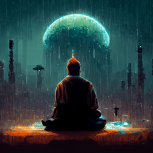
OKay finally have watched the entire video! Great episode Fav line "Each sparkle, ten thousand lives extinguished." and "Raindrops hit your face in slow motion. Each droplet, a unique bubble universe unto itself, filled with trillions of inhabitants all oblivious as to why their universe came crashing to an end. You think to yourself, “So this is how a universe ends.” Each droplet is filled with the collective consciousness of all the sentient entities inhabiting it. As a droplet hits your face it transfers the collective wisdom of a thousand ancient civilizations directly into your mind. Their memories, their struggles, their dreams, their insights — all integrate smoothly into your psyche. You stand there, showered by an immense cosmic intelligence. It feels like bathing in divine light. Its sentience and beauty sends waves of bliss radiating through your body"
-
Let me ask you a question. Does your lungs need rights? Does your kidneys need rights? How do you think your body would fare if your lungs said you know what I am not getting the respect I deserve so screw this!!! How would you feel if more calories went to your liver than your brain? Calories only enter your body because each part of the body plays apart in getting it there the same way money is only earned because of the collective effort of all that live in society. What about your intestines? What if every organ looked down on your intestines because they deal with feces? What if they mocked them so they went on strike? Your body would have died LONG AGO that's what. Humans only issue is their increased intelligence, their sentience. They are suffering their raised consciousness. If your organs acted like humans do the body would be destroyed so what do you think we are doing right now? Notice that how a billionaire and millionaire act in an economy is VERY similar to how a cancer cell acts in your body. A cancer cell take up all the resources and calories and provides nothing. Should your body wait for the cancer cell to trickle down the calories? Humanity thinks it is separate, and its sad because the pandemic showed the average day person how much power they have. Did they realize it? Nope STILL ASLEEP. A king/queen cannot rule with no people. And the quickest way to take a kingdom out is to attack the farmers. The farmers/ranchers/ water technicians are the most important people in a country because they supply the food. Next is the carpenters/plumbers/sanitation because they provide shelter, and waste disposal, and lastly the clothing vendors so we have something to wear. But when a country gets rich....you overvalue the entertainers especially since you need them because you are oh so depressed. It's like oxygen...its the most valuable resource on the planet, far more valuable than money, yet you take it for granted because it is ALWAYS there. So the building blocks of society that keep it going are overlooked yet it you took this all away then there would be no country. The human body doesn't have these problems, NO part of the human body has its OWN agenda, each part is COMPLETELY self less.