

Carl-Richard
Moderator-
Content count
16,218 -
Joined
-
Last visited
Posts posted by Carl-Richard
-
-
I have problems with necessarily tying functions together into 4-function clusters. But it's fine if you treat all the types/functions (only functions if you want to be rigorous) as statistical traits, so e.g. I'm x% INFP, x% INTP, x% ENFP, and so on (or x% Fi, x% Ti, x% Ne, x% Te, and so on). Other than that, MBTI's "type" aspect is really no more problematic than the diagnoses in DSM-5. If you e.g. have 7 symptoms of schizophrenia, not 6, then you "have" schizophrenia (or you "are" a schizophrenic). Like the diagnoses in DSM-5, MBTI is useful for describing and predicting behavior. They might not capture the entire complexity of a single individual, and indeed one individual might have several diagnoses at one time (or be just below the diagnostic threshold).
-
6 hours ago, Breakingthewall said:In my opinion, he's a particularly foolish guy with a gigantic self-concept, a typical spiritual narcissist who, because he's very superficial, believes that by simplifying everything and subtly ridiculing the deepest perceptions, he's on top.
Is there one spiritual teacher you're not paranoid about?
-
1 hour ago, Reciprocality said:The most obvious answer would be that though we can and will logically separate the meaning of a) stroking a cat and b) the characteristics of the cat these two things will not actually be separated merely for that reason, and their non-separation is tied to a subtler and deeper set of logic that pertains to the reality and not merely potentiality of the situation.
We may use James Gibsons theory of affordances to illustrate it better, you don't premeditate the time when you will pet the cat, instead the behaviour and characteristics of the cat spontaneously makes you think of petting (affords you the idea of petting), plenty of these characteristics are for instance present in young children but disappears more the older the child becomes.
Some of these characteristics are: cuteness, non-agency and innocence.
That pets and small children react positively to petting is a given, the bodily pleasure is a given, they do not yet separate themselves from the one who is petting them via a rigid representation of a self, and thus do not need to calculate the emotional entailments of the situation that would dissimulate it.
*Somebody starts petting Reciprocality* — "I've calculated the emotional entailments of the situation and dissimulated it".
-
23 minutes ago, samijiben said:I think its because it is tabboo
if everyone were more conscious & didn't supress their sexuality, perhaps we would inhabit a world of spontaneous orgies and increased openness to weird shit that in today's world would get your ass incarcerated.
Just a thought.
Spontaneous orgies during UN council meetings. That would be something.
-
I fed the prompt in the original post to the deep research ChatGPT o3 and told it to type @Leo Gura with a ≥1000 post sample size. Here is a summary and a link to the enormous ~7500 words research paper it generated:
QuoteTo summarize our findings:
- Leo Gura’s MBTI type is most likely INTP (Introverted, Intuitive, Thinking, Perceiving), with an approximately 35% Bayesian posterior probability in our model.
- A close second is INTJ (about 33% posterior).
- It is highly implausible that he is extroverted (we assign ~5% to ENTP mostly for theoretical completeness), and somewhat unlikely that he is a Feeling type like INFJ (~27% but that number would drop if we weighted the Thinking evidence more).
- In practical terms, we can say he is an INTx – an intellectual introvert with intuitive and thinking preferences. He himself once casually identified as INTP, and our rigorous analysis supports that with slight reservations about J/P.
- Functionally, he shows dominant introverted analysis (Ti or Ni) and auxiliary expansive intuition (Ne or Te, respectively). The balance of evidence (tone, flexibility, test result) leans Ti-Ne (INTP).
https://chatgpt.com/s/t_6863583b5c588191a59bb26dfccec267
I might be misremembering, but this "INTx" answer was something I argued at one point when discussing Leo's MBTI type with @thisintegrated some years ago where he insisted he was INTJ.
I should probably tell it to not weigh any previous test results though, but it didn't seem to weigh it that much according to the report.
-
One of the greatest things you can do is to sow the conditions for people's self-expression.
-
We usually focus on other ways of giving humans attention, like talking. But we do "pet" each other, e.g. to show physical affection or to communicate, e.g. patting somebody on the shoulder when they did a good job. It's just more likely between people who have strong bonds.
-
I've noticed I should try to force myself to learn certain things related to my work (using programs like MATLAB) rather than get GPT to do the work, as that would actually speed up my work, because sometimes GPT gets stuck and neither of us knows why. If I have just a little more knowledge of certain things, I can probably help it get unstuck a few times more where it really matters, and then the work grows exponentially.
-
Below is a **re-engineered version of your original prompt**.
It keeps every substantive requirement you listed but applies the five fidelity aids we discussed:

* **Chunk & nest** → Major sections and sub-bullets
* **Explicit priorities** → Numbered “override order” up front
* **Self-check** → Checklist the model must output before final answer
* **Two-turn structure** → You send Part 1 (spec) first, then Part 2 (question)
* **Clarification invitation** → Model must ask if anything is unclear

---

### 🚩 PART 1 — SPECIFICATION (READ-ONLY)

*The assistant should not answer yet; it should only acknowledge understanding or ask clarifying questions.*

#### 0. Override-Order (Priority Rules)

1. **OpenAI policy & safety**
2. **This specification**
3. **Any future user follow-ups**

---

#### 1. Context

You will analyse the forum contributions of *Carl-Richard* (Actualized.org) to estimate his probabilistic MBTI type using peer-reviewed standards only.

---

#### 2. Deliverables & Format

Provide your answer under **exactly seven numbered H2 headings**:

1. **Methodology**
2. **Linguistic Analysis**
3. **Evidence Excerpts**
4. **Typological Reasoning**
5. **Results Table**
6. **Bias Checks**
7. **Limitations & Ethics**

*(Do **not** add or remove headings.)*

---

#### 3. Core Requirements (“Must-haves”)

**A. Sampling**

* State sampling frame and page-interval method.
* Collect ≥ 100 unique posts; list count per calendar year.

**B. Linguistic Corpus Metrics**

* Compute per-1 000-word rates for:

  * mean sentence length
  * type–token ratio
  * jargon density
  * hedging frequency
  * metaphor density
  * rhetorical-device count

**C. Evidence Excerpts**

* Quote ≥ 10 passages (≤ 40 words each) with thread titles & dates.

**D. Typology**

* Map observed behaviours to cognitive functions using recognised functional models.

**E. Bayesian Inference**

* Show priors, likelihood cues, and posterior probabilities for the **four** most plausible types.

**F. Trait Triangulation**

* Cross-reference findings with Big Five **and** HEXACO literature.

**G. Bias & Rigour**

* List specific cognitive biases checked + mitigation steps.

**H. Citations**

* Minimum: three MBTI validity papers **and** one personality-language corpus study (APA style).

**I. Misconception Guardrails**

* For each of the 11 misconceptions supplied, include the ✗/✓ bullet exactly as provided.

**J. Closing**

* End with practical next steps to improve reliability (e.g., LIWC pass, Form M).

---

#### 4. Secondary Style Guidelines (“Nice-to-haves”)

* Keep tone scholarly and neutral.
* Avoid anecdotal claims and pathologising language.
* Refrain from definite diagnoses; phrase in probabilistic terms.
* Use tables **only** where they improve clarity (metrics & results).

---

#### 5. Self-Check Checklist

At the very end of your response, output a short checklist confirming you have:

| # | Item                           | Yes/No |
| - | ------------------------------ | ------ |
| 1 | ≥ 100 posts sampled            |        |
| 2 | Metrics table present          |        |
| 3 | 10+ excerpts with metadata     |        |
| 4 | Bayesian table (4 types)       |        |
| 5 | ≥ 4 scholarly citations        |        |
| 6 | Misconception bullets included |        |
| 7 | Ethics note present            |        |

*(Populate the “Yes/No” column yourself before sending the final answer.)*

---

#### 6. Clarification Protocol

If **any** part of this specification is ambiguous, ask follow-up questions **before** attempting the task.

---

### ➡️ PART 2 — QUESTION / GO-AHEAD

*(You will send this as a separate message after the assistant acknowledges Part 1.)*

> “Proceed with the MBTI estimation of Carl-Richard per the above specification.”

---

### How to use

1. **Send the text above (Part 1) as a single system or user message.**
2. Wait for the assistant to say something like *“I understand. Do you have any clarifications?”*
3. Send Part 2 to trigger the full analysis.

This structure should maximise compliance with every requirement while giving the model explicit leeway to ask for clarification if needed and a built-in self-audit step.
@Joshe I got ChatGPT o3 to tell me how to best make my prompt to maximize things like readability and I made it revise my prompt based on those criteria, and this is what it fed me.
-
15 minutes ago, Someone here said:@Carl-Richard yeah . Your comment above is basically get busy in some hobby or Job or some socialization or start a business or go hit on some chicks with your nonexistent bad friends and you will immediately forget about what the fuck is existence and stuff like that ..correct?
It's more like instead of trying to stand on the bottom of Niagra falls and trying to stop the water, you jump in the water and go for a swim.
-
23 minutes ago, Someone here said:Well ..i guess my conundrum is unexpressible. No worries thanks everyone for your comments. I'm getting the hint the advice boils down to "get a job or kick some rocks " . Ty.i will consider your advice. No offence taken Carl .you are good guy.
That video I posted, it hit me like a ton of bricks the first time I watched it.
-
Don't take the title as a pejorative. It's a highly relevant video:
-
My newest results based on adding the misconceptions section:
Quote| Rank | Type | Posterior P | Dominant / Aux | Notes |
| ---- | -------- | ----------: | -------------- | ------------------------------------------------------------------------------- |
| 1 | **INTP** | 0.41 | Ti – Ne | Highest Ti lexical indicators; low social-affect markers |
| 2 | ENTP | 0.24 | Ne – Ti | Higher posting frequency could suggest Extraversion, but Ti>Ne weights disagree |
| 3 | INTJ | 0.17 | Ni – Te | System-building evident but Te evidence weaker than Ti |
| 4 | INFP | 0.15 | Fi – Ne | Hedging & metaphor compatible; logical phrasing argues against Fi-lead |
I still think I'm more INFP than INTP but maybe my writing is more INTP. Maybe I could do some data-driven dialectics where I feed it my own description of myself and my own type estimation and make it single out places where its analysis might be inaccurate and how the prompt can be improved to address this.
It could also probably be beneficial after new additions to ask it to streamline the prompt and remove repetitions to improve processing.
-
52 minutes ago, Joshe said:Cool idea. One problem I ran into when working with ChatGPT and MBTI is, ChatGPT’s MBTI knowledge is too intertwined with internet lore - it hasn’t been sufficiently trained on MBTI. Your prompt would probably produce mostly accurate results but ChatGPT would still make critical errors at a significant rate.
The eternal problem with generalized LLMs. A possible counter to that other than the "only use academic literature" prompt would be to feed it a list of common inaccurate internet tropes that it should avoid.
Here is what I will update the original prompt with (could be developed further):
Quote### MBTI Misconceptions to Avoid
• ✗ Treating the four-letter code as a complete personality description → ✓ Use it only as a coarse preference map; report evidence for preference *strength*, not destiny.
• ✗ Assuming type is immutable across the lifespan → ✓ Note test–retest drift (≈40 % change) and frame conclusions as probabilistic snapshots.
• ✗ Equating “Extraversion” with loud sociability and “Introversion” with shyness → ✓ Define the axis in Jungian terms (energy orientation), then check behavioural evidence, not social anxiety cues.
• ✗ Reducing “Thinking” to unemotional logic and “Feeling” to irrationality → ✓ Clarify that T/F index the *decision-making criteria* (impersonal logic vs. values), not presence/absence of emotion.
• ✗ Reading “Judging” as judgmental/stubborn and “Perceiving” as open-minded/chaotic → ✓ Explain J/P as preferred *lifestyle structure* (decisive closure vs. adaptive exploration).
• ✗ Mixing dichotomies with the eight cognitive-function stack without theoretical grounding → ✓ Keep dichotomy evidence separate from any function-level hypotheses, and justify any stack claims.
• ✗ Treating type descriptions as stereotypical “career match” or “compatibility” horoscopes → ✓ Cite empirical findings only where effect sizes exist; otherwise mark as speculative.
• ✗ Pathologising types (e.g., “INTPs lack empathy”, “ESFPs are shallow”) → ✓ Use neutral language; avoid clinical labels unless supported by peer-reviewed data.
• ✗ Over-mapping MBTI letters onto the Big Five (e.g., “N ≙ Openness”) → ✓ Acknowledge areas of overlap but keep construct boundaries explicit; reference cross-inventory correlations.
• ✗ Ignoring cultural/linguistic variation in type expression → ✓ Specify that behavioural indicators may shift with sociolinguistic context, so weight linguistic cues accordingly.
• ✗ Cherry-picking quotes that confirm a favoured type → ✓ Actively sample for disconfirming evidence; document selection criteria and coder reliability.
52 minutes ago, Joshe said:Also, if it reads a post where someone claims to be ENTP, it might just lazily conclude that claim is true. Getting the prompt right is difficult.
"Avoid anecdotal claims" was supposed to counter this. Who knows if it actually works though lol
-
5 hours ago, Someone here said:How to reconcile the absurdity of life with its sanity and solidity ?
By accepting things you cannot solve now and moving on to things you can solve. That's a part of the growth mindset, of not expecting things to be served to you on a silver platter. It might be solved later with better knowledge.
Also, when you engage with life intensely enough, unsolveable questions simply become absurd. You're constantly in a state of flow of solving things. If things aren't solved, you simply move on and keep the dopamine flowing.
If you don't deal with enough solveable problems, your mind will focus on unsolveable problems. If you adopt enough responsibilities in life and engage with things that have a clear direction, you won't have time for endlessly looping about unsolveable questions.
-
Here is a ChatGPT o3 prompt I developed (together with ChatGPT o3) for typing your MBTI type based on your posts on this forum:
QuoteUsing a purely academic understanding of MBTI (i.e., grounded in peer-reviewed literature rather than internet lore), estimate [insert forum username here]’s MBTI type from Actualized.org.
Methodological requirements
1. Sampling – State your sampling frame across years and sub-forums, then gather ≥ 100 distinct posts, avoiding topical clustering; list counts per year.
2. Linguistic corpus analysis – Provide a table showing mean sentence length, type–token ratio, jargon density, hedging frequency, metaphor density, and rhetorical-device counts per 1 000 words.
3. Evidence excerpts – Quote at least ten passages (≤ 40 words each) that best exemplify the patterns you discuss, with thread titles and dates.
Analytic instructions
4. Base your typing on recognised functional models; map observed behaviours to dominant/auxiliary functions.
5. Compute Bayesian posterior probabilities for the four most plausible types, explaining priors and likelihood cues.
6. Cross-reference traits with Big Five and HEXACO findings to triangulate your conclusion.
Bias & rigour
7. Explicitly list which cognitive biases (confirmation, anchoring, etc.) you checked for and how you mitigated them.
8. Cite at least three peer-reviewed MBTI validity/reliability papers and one corpus-linguistics study on personality-language links (APA style).
9. MBTI Misconceptions to Avoid
(Each item names a misunderstanding/trope [✗] and immediately replaces it with the scholarly corrective [✓]):
• ✗ Treating the four-letter code as a complete personality description → ✓ Use it only as a coarse preference map; report evidence for preference *strength*, not destiny.
• ✗ Assuming type is immutable across the lifespan → ✓ Note test–retest drift (≈40 % change) and frame conclusions as probabilistic snapshots.
• ✗ Equating “Extraversion” with loud sociability and “Introversion” with shyness → ✓ Define the axis in Jungian terms (energy orientation), then check behavioural evidence, not social anxiety cues.
• ✗ Reducing “Thinking” to unemotional logic and “Feeling” to irrationality → ✓ Clarify that T/F index the *decision-making criteria* (impersonal logic vs. values), not presence/absence of emotion.
• ✗ Reading “Judging” as judgmental/stubborn and “Perceiving” as open-minded/chaotic → ✓ Explain J/P as preferred *lifestyle structure* (decisive closure vs. adaptive exploration).
• ✗ Mixing dichotomies with the eight cognitive-function stack without theoretical grounding → ✓ Keep dichotomy evidence separate from any function-level hypotheses, and justify any stack claims.
• ✗ Treating type descriptions as stereotypical “career match” or “compatibility” horoscopes → ✓ Cite empirical findings only where effect sizes exist; otherwise mark as speculative.
• ✗ Pathologising types (e.g., “INTPs lack empathy”, “ESFPs are shallow”) → ✓ Use neutral language; avoid clinical labels unless supported by peer-reviewed data.
• ✗ Over-mapping MBTI letters onto the Big Five (e.g., “N ≙ Openness”) → ✓ Acknowledge areas of overlap but keep construct boundaries explicit; reference cross-inventory correlations.
• ✗ Ignoring cultural/linguistic variation in type expression → ✓ Specify that behavioural indicators may shift with sociolinguistic context, so weight linguistic cues accordingly.
• ✗ Cherry-picking quotes that confirm a favoured type → ✓ Actively sample for disconfirming evidence; document selection criteria and coder reliability.
Output format
10. Organise your answer under numbered headings: Methodology, Linguistic Analysis, Typological Reasoning, Results Table, Bias Checks, Limitations & Ethics, Future Work.
11. Close with practical next steps (e.g., automated LIWC pass, direct MBTI Form M) to improve estimate reliability.
Keep the tone scholarly, precise, and transparent. Avoid anecdotal claims, refrain from definite diagnoses, and include an ethics note on typing individuals without explicit consent.
Why is this good? Because it avoids the biases associated with self-report, the bane of all self-administered personality tests. Now you can get a highly data-driven, third person testing of your personality type with just the click of a button.
Feel free to feed this prompt to ChatGPT o3. Also, somebody try toggling the deep research option and increase the sample size by 10x (simply 10x all the relevant numbers in the prompt). Please share your results and your thoughts. Also feel free to provide your own prompts and develop the promps further by feeding it back to ChatGPT and cleverly asking it for help on how to improve it.
-
Upgrade your worldview from a certainty vs unknown based worldview to a statistical worldview. What is likely given certain estimates? What is reasonable given certain arguments? Looking for certainty means you are looking for comfort. Growing up means going beyond mere comfort-seeking.
Upgrade your worldview from a static worldview to a growth worldview. Wherever you put your focus and time in, it will grow. And even if you can't see a path right now, the path might be uncovered by simply walking a path. Your ignorance depends on your growth. It's not static. Your knowledge grows with data points, with statistics. Things do not reveal themselves without discovery, and discovery happens by taking the journey.
-
20 minutes ago, UnbornTao said:Somebody make up some new words about being an idiotic genius.
Degenius.
-
3 hours ago, Nilsi said:What you call “intuitive,” “natural,” and “sacred” are already truths produced by exactly the logic I’ve described above.
As a psychologist, you should seriously consider engaging with Foucault’s work, since his primary focus was precisely on how so-called knowledge and truth are constructed in fields like psychiatry, medicine, and science. These arguments are far from trivial, yet you keep flippantly glossing over them.
I'm lost in the sauce. What's the argument and how does it negate that certain structures have a certain naturalness to them? Does an amoeba have to discipline itself to chase a bacterium?
-
3 hours ago, UnbornTao said:Thanks for the input.
In relation to the following picture, see if you can recognize, or pull apart, the component of meaning - as it occurs in your experience:
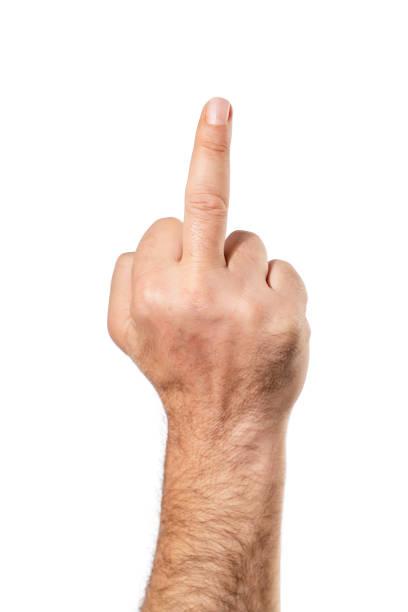
What does the gesture mean? What's your reaction upon seeing it? Is it offensive? How so? Can you perceive it before you interpret it?
Seeing something for what it is - in and of itself - seems to precede meaning. What does that tell us about this relationship?
Ey fok yoo man.
-
18 minutes ago, Nilsi said:And it’s neurotic in precisely the Freudian sense.
Foucault develops this brilliantly when he shows how truth is produced through disciplinary regimens - what he calls “technologies of the self.”
Just look at any example of people claiming to possess the truth: it’s always coupled with injunctions about how to attain it - Jordan Peterson’s 12 Rules for Life, Islam’s codes of conduct, the scientific method, shoving research chemicals up your ass, or even supposedly holistic procedures like Vervaeke’s “ecologies of practice.”
You have to neurotically discipline yourself to reach this “truth,” and the moment you stop, the Logos destabilizes and you’re thrust into “chaos.”
So Logos isn’t something that exists “out there” as a deep structure - it’s inseparable from the self participating in its production.
Or maybe it's about de-disciplining yourself of certain things and re-aligning with what is often more intuitive and natural. That's the conundrum of modern society and the materialist mind virus. You're essentially taught to feed yourself poison and you have to unlearn that, which requires, well, learning something. If you were never taught it, if the environment was already more healthy, you would not need to discipline yourself as much to have it. If you were a caveman living in caves 30 000 years ago, would you need to discipline yourself to be social or be in a community, "go out" and meet women, get laid, be physically active, sleep well, engage in sacred practices and rituals, lay down the phone, stop scrolling TikTok and get to work?
-
@Nilsi You're talking about fluctuations and the power of obsession and attention to magnify something to where you prioritize something over something else. That's definitely a part of the human repetoire of meaning. Frank Zappa comes to mind as someone who sometimes worked for days on end without sleep and only ate and slept when he felt absolutely forced to. He also died of cancer at the age of 53. Some live on that chaotic and obsessive edge. But it doesn't change the fact that even the content of that meaning, boils down to biology and movement, in the sense that it's about movement through some environment, be it musical, abstract philosophy, or a literal walk in the park. And this movement is not purely incidental; it has cycles, structure, logos. A meaningful piece of art or music does not single-heartedly stand on an amorphous ground. It may hinge on divergent and chaotic elements, but its base is firm.
I know you hate me saying it, but I'm not painting an either/or picture. Meaning is structured and chaotic, dynamic and static, energy and form. I get it, you have a thing for chaos, you like chaotic philosophers, you like challenging the ortodoxy, you like giving the antithesis. But even that has a structure that can be described.
-
3 hours ago, MarkKol said:ChatGPT usage has exceeded my combined social media use by god knows how much. I probably use it 5-6 hours a day, 24/7, with the paid model.
I'm honestly surprised sometimes at how uncreative it can be, a lot of the time I can be 10x more clever and creative than its paid model, not to say that I'm super creative or anything, what I'm trying to convey is that ChatGPT is just a condensed information source. It just reads and makes sense of that information it was trained on, it can't actually use that information on its own and use it to create a new thought or idea...
If ChatGPT was a baker, for example, it would just use all the ways people have baked bread before; it wouldn't actually invent a new way to bake bread. It can't actually use its own intelligence. After I discovered this it it made me increasingly pessimistic about the future and current hype of AI. I think it was stupid of us to expect that AI would behave exactly like a human with infinite memory and creativity would; it doesn't.
While I generally agree somewhat, one time I forced GPT to make me a script a certain way because I didn't like its initial suggestion, and then after a while, instead of giving me an answer, it said "look, you've now spent hours on this approach and it's going nowhere, maybe instead try the first thing I said". That's the first time I felt a sense of agency reaching out from behind the screen and touching me. But in hindsight, it could be something that is programmed in.
-
I gave it two pictures and it typed me as ENFP in the happy picture and INFP in the neutral picture. This one dude insisted I was ENFP and I think I'm INFP/INTP

in Personal Development -- [Main]
Posted
What's that?