
Carl-Richard
Moderator-
Content count
16,219 -
Joined
-
Last visited
Posts posted by Carl-Richard
-
-
37 minutes ago, Alexop said:ask them trap questions that will reveal their biases and partisanship.
So you don't know if any celebrity intellectual you haven't personally spoken to is Yellow?
-
50 minutes ago, Leo Gura said:No. I never said that.
This is such a weird way of framing it.
Ben Shapiro and JP are incapable of truly. understanding Yellow. There is a big difference between learning it as a school assignment vs actually understanding it to the point where it changes how your mind works and the worldview you hold.
How do you know when it has changed how somebody's mind works and that they're not just larping?
-
4 hours ago, Leo Gura said:Yes, they are Yellow. Right-wingers are not Yellow.
They are Yellow because they are able to integrate many different paradigms in ways that no lower stage can. They are not stuck fighting other stages like how Jordan Peterson or Musk or Shapiro are.
This is very obvious. This is not a close call.
Oh really? So the telling signs are what somebody does in the world rather than what somebody is capable of understanding? Interesting...
My point with this thread is essentially that if you let for example Ben Shapiro or Jordan Peterson spend a week learning about SD and make them go larp as Tier 2 on the forum and make them do it as best as they can or they get kicked out (to imitate the incentive that the Tier 2 fanatics on the forum have for maintaining their identity), I think they will do it much better than the average Tier 2 fanatic on here. And if that is the case, what does that say about their Tier 2 larp? Maybe you have to dig a bit deeper to judge whether or not you are actually Tier 2 (like for example looking at one's worldly occupation). Again, I'm just trying to pull people's pants down for those that might need it.
4 hours ago, AION said:It is not a question of understanding but a question of seeing.
When Europeans came to the Americas the natives couldn’t recognize the pattern called a ship.
This shows the remarkable ability of our brain. To be able to connect all the dots requires massive amounts of curiosity/libido which successful people like Shapiro don’t have because of their cozy position so they are not even looking for it.
To be tier 2 you have to look for it with massive curiosity/libido. One can’t crawl through the eye of the needle by chance.
Yeah, like "seeing" a YouTube video or "seeing" a fancy graph on Google Images. That's as much gusto you need to pass the "I'm actually Tier 2" bar. The only libido here is being shot into a Kleenex 🙈
-
16 minutes ago, AION said:Elon Musk was more SD yellow than SD green. He was actually in between in the twilight zone until regressive authoritarian policies of SD green pulled him back out of necessity. He still has the integral mind which is most important and I believe he will revise his political stance before the end.
Notice what I've been asking in this thread: does Elon understand Yellow, or does he mascarade with a stereotyped, developmentally ungrounded, shallow understanding? And if Elon is capable of understanding Yellow, why not Ben Shapiro, Chris Langan, Jordan Peterson? And if these are not truly yellow, who is? Jordan Hall? Daniel Schmachtenberger? John Vervaeke? And why are they Yellow?
-
9 minutes ago, Leo Gura said:He is a deep and visionary thinker within tech and business.
Which did not change, or did it?
-
7 hours ago, zurew said:That way of using those words seem to be wildly misleading and inappropriate in most contexts.
When you give for example a causal explanation, you dont suddenly provide a new substance to thing that is being explained .
"Why are you drunk? Well, because I drank 10 beers" - did I provide 'drinking acohol' metaphysics to being drunk? - that question doesn't make much sense.
Or another example would be saying that the reason why matter exists is because God created matter - that doesn't mean though that God is made of matter.
John Vervaeke has a metaphysics that very clearly don't buy into the idea that things can be exhaustively explained by or that things can be reduce to their simpler/smaller components .
You got drunk because alcohol binds to your GABAA receptors, or because it invades all the cells in your body including your brain responsible for movement and higher cognitive functions, or because you wanted to have fun that night, or because you conformed to the social pressure to drink, or because you wanted to numb yourself to emotional pain, etc.
You can explain it in many ways, and the point of calling it a reduction is that each of the ways are partial and often somewhat unitary (something gets reduced to "one thing"). You take the infinite complexity of reality and reduce it down to a specific structure. Whether or not your reduction base contains many units or notions like top-down causality, there is still a reduction happening.
-
5 hours ago, Leo Gura said:Changing the world is not what defines Tier 2.
Tier 1 changes the world plenty. Tier 1 has way more power to change the world.
Musk will change much more of the world than me. But I am more cognitively developed than him.
Why did you put Elon Musk in Tier 2 initially? What changed?
-
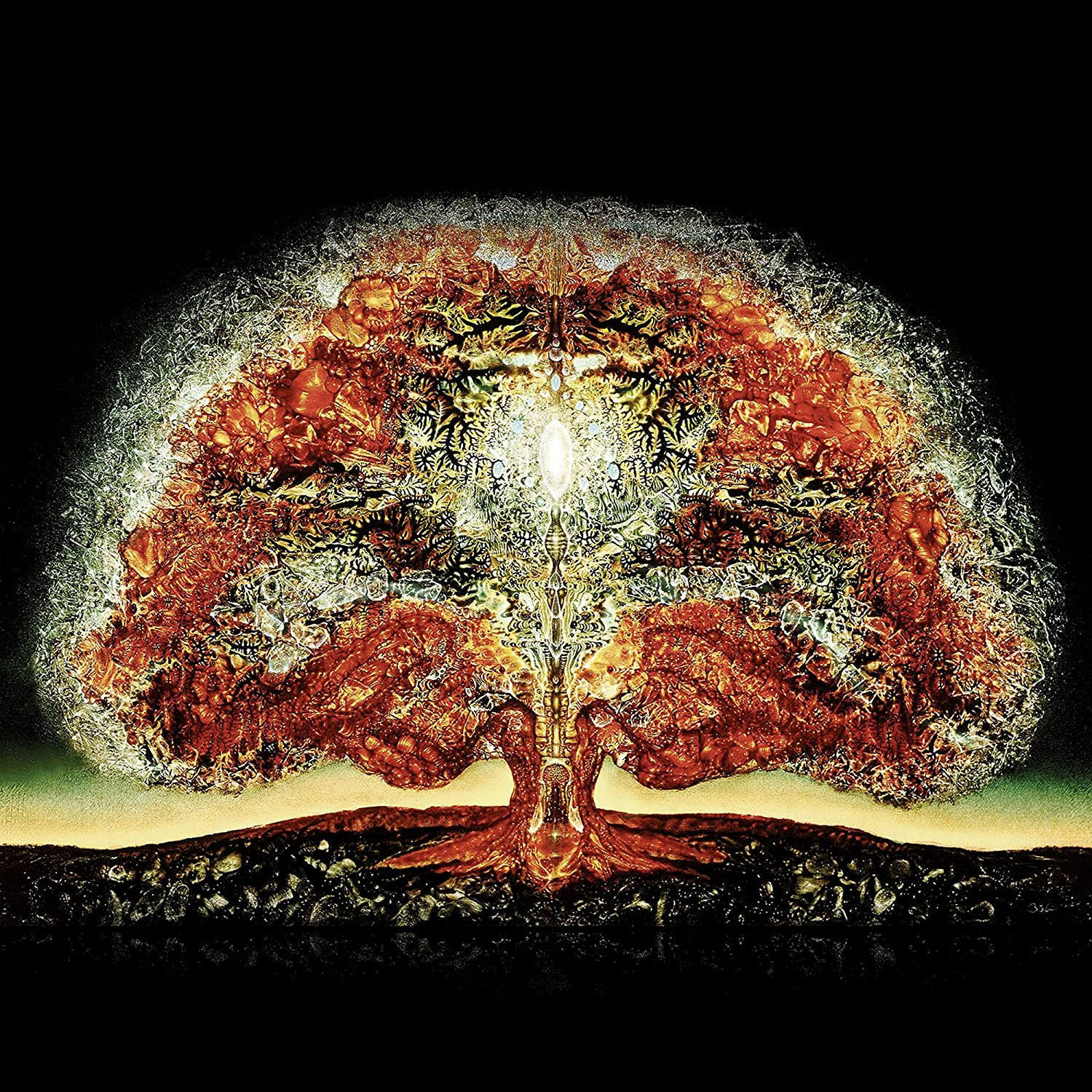
1 hour ago, Hojo said:print that and stare at the dot in the middle from an arms length away, at sunset or sunrise.

You want to see what I made my study participants stare into while measuring their brains?
 (PS: if you are on mobile, the dot is very small):

-
I also want to bring up another point about the role of identity (and survival) that is really obvious but seemingly often forgotten when interpreting SD:
Take somebody like Ben Shapiro. He is often painted as Blue or Orange. I severely doubt he isn't able to grasp what SD is. I also doubt he is unable to really understand what the progressive/"Green" ideas he is fighting against are. He has read a lot, he knows what post-modernism is, what post-structuralism is, all these philosophical underpinnings that supposedly spawned Green. Yet his identity, his upbringing, his attachments, his biases, lies with Blue and Orange values, politics and way of life.
Same with someone like Chris Langan, who I could also see somebody paint as Blue or Orange, with his support for Trump and general conservative views. He is a god damned panentheist that talks about the connections between Hindun and Christian notions of God! He has his own metaphysical hyper-model that puts "cognition" at the bottom of reality (it's in the name; "C"TMU). His context and construct awareness is millennia ahead of the average 18 year old stoner on this forum that self-proclaims knowledge of SD (I'm talking about me from the past of course).
Then you have the juicy examples, like the plight of Jordan Peterson (1) and more recently Elon Musk (2) who Leo funnily decided to "demote" from his list of examples of Yellow:-
How could this be, that a highly credentialed professor of psychology, who has made it essentially his life's work to study the metaphorical interpretation of religious texts and connect them to insights in modern psychology and science, who claims to have studied post-modernism and cannot stop talking about it, who is routinely and ironically even called a post-modernist by many of his critics (both sincerely and tongue in cheek), could "fall" to the depths of Blue political punditry?
Not a lack of understanding, but of course, identity and survival! He was even crowned as one of the promising spearheads of the "intellectual dark web", which Wilber himself called a potential catalyst for widespread Tier 2. Then he became severely ill, almost died and came back noticeably impaired and with a strong financial and power incentive to stamp out the wokeness that had plunged him into worldwide fame and that had also cost him his academic career and even his clinical license.
- How could this be, that a geeky tech billionaire who has fixated on futurist fantasies for humanity for most of his career and has made rather successful steps in that direction (more than anybody else, but yes, granted giants flops, broken promises and failed predictions) could indeed fall to the depths of not just Blue punditry but frankly Red-ish monarchy? Identity and survival! Not a lack of understanding. Some say his sole motivation for funding the Trump campaign was to "destroy the woke mind virus" that allegedly had "claimed the life" of his then son and now daughter.
And of course, how can we explain the 18 year old forum dwellers that preach the Yellow doctrine? Identity and survival. Identity and survival directs your focus, what you find important, and it can be largely orthogonal to pure intellectual understanding or even organic "SD development" (which frankly is a very simplistic and yes reductionistic model which has been elaborated and expanded upon by other thinkers like Wilber and my favorite Hanzi Freinacht).Just in general, I think identity and survival explains so much of what we see around us and also where staircase models don't fare as well. I was personally just an inch away from going down the rabbit hole of ethnonationalism as an 17-18 year old. I starkly remember standing at a spiritual crossroads and choosing one over the other; the familiar values of my social democrat upbringing, or the new and exciting, challenging and transgressive tribal taunts of my privileged brothers. I could've been one of the guys I almost banned from this forum for repeatedly rubbing in people's faces that Nick Fuentes is supposedly a perfectly swell guy.
So often, it's best to let the obvious points come to the surface instead of letting the cognitive dissonance from an overly simplistic model reign with its "totalitarian" grasp on your mind ( @Nilsi ).
).
-
How could this be, that a highly credentialed professor of psychology, who has made it essentially his life's work to study the metaphorical interpretation of religious texts and connect them to insights in modern psychology and science, who claims to have studied post-modernism and cannot stop talking about it, who is routinely and ironically even called a post-modernist by many of his critics (both sincerely and tongue in cheek), could "fall" to the depths of Blue political punditry?
-
6 hours ago, Nilsi said:Of course there are tradeoffs. If you want your essentialist metaphysics - Plato, Kant, Freud, Lacan, Jung, all that good stuff - go ahead. Neither side is more “true.” Which doesn’t mean there’s no truth, btw.
Just don’t come at me with your “both/and” bullshit. Sooner or later, reality will force your hand. When shit hits the fan, you’ll know exactly which God you’re praying to. That’s the thing about metaphysics - you don’t get to not choose.
"Choose your reductionist poison" - probably something Bernardo Kastrup has said. What he has actually said is that to explain something is to reduce it to something else. So it's all really reductionism. It's just some explanations are more reductionistic than others (e.g. explaining everything in terms of one thing, which is ironically what reducing everything to "differences" is
).
-
10 minutes ago, Judy2 said:@Carl-Richard if i set a timer and i manage to stay seated during that time, does that alone qualify the session as successfully completed, no matter what happens in my mind and body in that time frame? or are there other criteria i have to meet in order to know that i successfully completed my meditation? essentially, how do i know that i am doing things right and not just wasting my time meditating inefficiently?
If you are able to incrementally increase your sessions all the way up to 60-90 minutes without being in severe mental anguish during the practice, that alone means you're doing something right. But yes, as long as you try to do the practice, simply sitting there for the time you chose is the only criteria. Setting a timer removes the expectation to "perform" or to expect a certain outcome. You just sit there and do the thing and when you're done you're done. If you become better over time, sitting there will become more fun, and if you get just a little better, that means you can get a lot better if you keep going. Delete from your mind the notion that "you can be sitting in meditation but you're not really meditating". This is the pinnacle of mental self-sabotage.
-
4 hours ago, Judy2 said:This is actually something that doesn't make sense to me yet, at least from my current point of view. It seems contradictory that meditation is about allowing intuition and feeling to unfold, while i am also supposed to discipline myself at the same time and resist certain impulses (like getting up and doing something because an emotion tells me to do that).
How do i reconcile discipline and intuition in my meditative practice? When i'm too "intuitive", the meditative practice usually fails by day 2 lol.
You have to find the right balance. There is always some discipline or structure involved, or else it's not a "practice". You're taking time out of your day to focus on something for some time. How structured or how disciplined you want to get is something you have to try out for yourself.
I just think setting a timer for your meditations is very helpful as it frees up unnecessary potential fears and thoughts, it allows for consistency and a structured way to up your progress, and it just simplifies everything. When you decide "I'm going to sit here for 15 minutes no matter what happens, and I'm fine with that", then there is no "have I meditated long enough?", "how long have I actually meditated for?", "when will I enter the zone?", "ah, I have to become just a little more conscious before I end the meditation", etc. Structure focuses you and reduces uncertainty.
But yes, meditation is very intuitive, and you have to find a lot of it out on your own. Choose some structure to follow, but let your intuition work within that. And if you feel some intuitive push to go outside the structure, test it out and see if it works. You can always return to the structure if it doesn't work. The way I discovered all of those things I listed was mostly through intuition, and because I'm a semi-ADHD kind of guy, I ended up practicing all of them at once.(Sometimes I prefer just zeroing in on one method, e.g. focusing on the breath, but doing many methods in parallel can be beneficial as it fills up your mind with a lot of things it has to keep track of and it makes your mind less likely to wander off somewhere else. Sometimes there is no method, just sitting. And what works the best can change over time).
-
26 minutes ago, UnbornTao said:Or do nothing facing a wall and see what comes up.
I just thought about staring yourself in the mirror, like really close up into one of your eyes, could be interesting, because you get a super detailed feedback of how still you are and what microcorrections you need to make, you amplify the state you are trying to create by presenting it directly in front of you, and by making your own eye an object, you deconstruct the sense of being centered in that very thing you are looking at.
23 minutes ago, Judy2 said:@Carl-Richard thanks for all the detailed suggestions, i'll try that:)
👍
-
First set the intention that you will be completely ok with just sitting meditating for the next whatever minutes. Try setting an alarm clock for e.g. 15 minutes so you don't have to keep track of time or become insecure about not sitting for long enough. Increase the alarm clock by 5 minutes every session.
Sit with your legs crossed in an upright but relaxed position. Take three deep breaths. Start scanning the sensations in your body and try to relax and release any tension you may find, starting from your feet, moving up your legs, to your stomach, chest, back, shoulders, arms, neck, head. Then do it one more time. When you reach the head again, move your attention to the sensations of the rising and falling of your breath (pick an area e.g. around your chest or nostrils).
Keep your awareness of the breath. Then become aware of sounds in the room or the silence. "Hear" the silence. Then become aware of tensions in the body, relax them or let them dissolve. Feel the small movements of your body as you sit there, let the movements run their course. Feel the fluctuations of small tensions in your body, encourage the unwinding of tensions.
Keep your awareness of all these things. Then become aware of your thoughts. Try to see when the next thought pops up. See what it's about. Try to become aware of the silence between thoughts. If you notice you lose yourself in thoughts without knowing that you are thinking, return to the breath, re-establish awareness of sounds in the room, awareness of the movements and tensions in the body, and repeat.
If some thoughts seem to bother you more than others, e.g. if it's something you need to do today, write it down so you can stop thinking about it and address it later that day. If the thoughts are simply general concerns or anxieties about your life or things that may or may not happen, simply let them go. Simply tell yourself "whatever happens to me, I will be fine". And as you sit there, simply re-assert that you will be fine with just sitting there for the rest of the meditation until the alarm clock rings.
Other things you can do is become aware of the visual fluctuations behind your closed eyelids. Become really curious about what they are made of, why they happen, why they move the way they do. Try to really become intensely aware of them. Observe them with all your attention.
Another thing can be to try to actually enter a state of samadhi (no thoughts) and pure void devoid of forms. Try to release yourself from the tensions of the body so much that you become weightless, try to literally leave your body behind, pretend like you're dead, like a corpse just sitting there. You want to feel like you are sitting so still, so relaxed and are so present with the sensations in your body that your sensations equalize and you enter a state of anesthesia, feeling like your body slowly becomes numb. And the more numb it becomes, the more you distance yourself from your body and the further into pure awareness you go. Here, your concentration should be intense. Also, your breathing should be intense, but not in an excessively labored "breathing method" kind of way, but rather your breathing must be filled with sensuality and love.
Another general tip is to try to feel the natural euphoric sensations of the breath (and the body in general) and immerse yourself in that, try to almost make it orgasmic.
-
8 hours ago, aurum said:That's a fair point I didn't consider.
It may be the case that on a percentage basis people of a higher development hold disproportionate amount of power. That would be interesting to research.
How accurate do you think their numbers are?
Probably not very accurate, but I'm always trying my best to talk about the model on its own terms (or its creators terms). If you bring too much of your own interpretation into it, you are not talking about the model anymore but yourself.
7 hours ago, LordFall said:@Carl-Richard I think you're right but I think the way you phrased your argument is a bit insane. Why would it be probabilistic? You either embody a stage and are able to think from its perspective or not. Probably most actualized members have some stage yellow in them or this forum wouldn't appeal to them. Stage green people usually are quite closed minded and refuse to see the world through other perspectives.
I personally see it more as progress bars for each stage rather than you've ascended to the next stage forever. For example integrating fully stage blue and orange is incredibly difficult and I would argue if you're not a multimillionaire you haven't fully grasped those stages and not stage orange. Stage blue was hard for me and I've looped back to it in terms of duty to my people and carrying my cross good ol jordan peterson style.
People are attracted to interesting-sounding and wise-sounding ideas, but that does not mean they are able to grasp them to the full extent. I'm willing to bet that if you interviewed random people on the street giving them a short briefing on SD and ask about their thoughts about it, the vast majority would say "wow, that's so cool, that makes so much sense!".
Then of course, based on that surface level understanding, you would have many who would tweak the theory based on their own biases (like you are doing right now) by for example "why is Green over Orange?" or "I think conservatism is Yellow" or "I think I'm a bit of everything". The bottom line is, it's always possible to pull the model down to your level, and people who come across this forum which has no entry requirements but a few clicks on a screen are not exempt from that.
I already mentioned what I think are the two best ways to identify whether you are at a certain stage, but another one would be to notice how you deal with everyday problems or problems in your life. For example, do you use the same solution for most problems (e.g. "I simply write down everything I find valuable"), or do you intentionally tailor the solutions to the particular problem (e.g. "I only write down what I need to do for today")? Do you hold two things as mutually exclusive (e.g. "I want to persevere on pursuing my goals but be kind with myself") when they could actually be compatible?
The way your mind deals with concrete issues is a much stronger test of your actual capacities than regurgitating a set of talking points purely in the abstract. It shows what your mind opts for when it's connected to your inner drives and impulses and when it's presented with something you don't have a pre-set answer for.
-
44 minutes ago, aurum said:That article I think points to what I was saying.
If you look at the percentage of societal power held by each stage, an obvious bell curve emerges, with Blue-Orange at the peak. Purple and Red have little power since a lot of society has evolved past that point. And the higher stages (Green+) have almost no power at all, especially Tier 2.
You have to look at the ratio of power to population.
44 minutes ago, aurum said:I think the reality of Tier 2 stages is that they are just too ahead of the developmental curve. Any attempt to bring Tier 2 into systems with Blue-Orange center of gravity will likely result in either the corruption or rejection of Tier 2.
Maybe if you were a serious spiral wizard you could make some gains and improve things, but I'd say the system mostly dominates you. Your Tier 2 turns into Tier 1.
Your system can be rather closed and private. It doesn't have to be global (or even local). Your private friends aren't global.
44 minutes ago, aurum said:Okay, but I'd say that's hardly enough on its own to qualify as Tier 2. Tier 1 stages can be strategic and get tangible results. The lower stages are all about tangible, survival results because that's all they know.
Look at the rollout of Project 2025. Highly strategic, real world tangible results impacting major systems. Tier 2? I don't think so.
Yellow is mostly reacting to the over-optimism / utopian thinking that Green can fall into. Which is valid, but getting results is not unique to Yellow.
I think the best way to "identify" whether somebody is in Tier 2 is by how much time they have spent in Green. Then how Yellow they appear on the outside comes second.
-
8 hours ago, Ulax said:So you believe that our external choices will be reflective on the stage we’re at. And that we can help tell what stage we are at by what choices we are making at this stage of our life?
The inside and outside are two sides of the same coin

-
1 hour ago, Nilsi said:There’s a big difference between some pseudo-intellectual astrology - like “which of the 7 colors am I?” - and Deleuze’s subversion of the identity principle in favor of a worldview grounded in difference in itself.
The only reduction happening there is the reduction of reductionism itself.
Yep. Reducing difference to mere difference.
1 hour ago, Nilsi said:Saying Deleuze reduces difference is like Alexander Dugin arguing that if postmodernism says all perspectives are equal, then the perspective that not all perspectives are equal must be equally valid. Which is, of course, reactionary bullshit.
Which is true.
-
54 minutes ago, aurum said:Assuming your power and influence over systems will increase as your development increases is an extremely shaky assumption, if not flat out wrong. Systems are often influenced by those who are the least developed or near average. Not the most.
That's Beck's assumption (I presume, referencing an article that excerpted a keynote speech by Whole Foods Market CEO John Mackey who gave an overview of SD while applying it the food industry and global agricultural system). But it makes sense that it would increase your power on average, as with IQ or anything else powerful. But maybe it's a more complicated picture.
54 minutes ago, aurum said:I think this is a problem with stage Orange personal development advice generally. They sell you this idea that developing yourself = meeting survival needs like money, power, status, relationships etc. Owen Cook is a master of this.
At some point though, you have to grow up and drop this fantasy. You might get some power, but overall developing yourself is often far more sophisticated and intangible than that.
If development is about power and human survival needs, then Donald Trump is more developed than all of us. That's where that logic eventually leads you.
Well, we're really just talking about getting friends and getting your ideas rolled out in some tangible format. It doesn't necessarily require to become a billionaire or anything. You can be heavily "strategic" about it, as the Yellow stage suggests.
-
39 minutes ago, Nilsi said:Yes, absolutely!
It’s precisely this sensibility - or dare I say, empathy - for what things are in themselves, or to speak with Deleuze, for difference in itself, that’s hopelessly lost in these kinds of totalitarian models.
All models reduce differences, even your man Delulu's.
-
2 hours ago, Nivsch said:From my own experience, just learning about a stage didn’t help me grow. Change only came when I chose to face a personal challenge more directly and independently, far from the common external thinking that didn’t help me. I learned it the hard way. This is what really changes your thinking structurally, because it comes from within. It makes the system truly believe it and shift. After that, this new structure translates itself to other areas of life.
Yes. That is the distinction I'm talking about. On the one hand, you have those who learn about Spiral Dynamics, start talking the language, start thinking about the concepts that they may or may not have a firm grasp on, and then they become sort of an authority on Tier 2 and by sort of a mental osmosis seemingly turn Tier 2 essentially over night in developmental terms. Then you have those that do things in the world, encounter challenges, try to align their actions with their values, build things, create things, solve problems, and through that process, they find themselves drawing upon these principles, find themselves attracting these kinds of people, creating these types of environments and places that seem Tier 2. It comes from within, and it's expressed on the outside, in their actions, in their being.
-
6 hours ago, aurum said:But is it safe to assume friends, community, network, business, career and creative work are associated with Tier 2? That's the whole question.
Why make that assumption in the first place?
Probably there is some correlation with Tier 2, but I wouldn't be surprised if it's actually stronger with people at Tier 1.
It seems to me Tier 2 is better off being assessed through cognitive function and perspective-taking, not your networking success. You can't assume those will go together.
Tier 2 could expressed purely mentally, could be more flexible with what environment they live in, etc. That's one side of the equation. The other side is that as humans and as organisms, we like to do things that are in accordance with our capabilities and values, we like to be with people who are like us, we like to create environments that support us and where we feel like we belong. And as development increases, power and general capability increases. And as development takes decades, you have a lot of time to make a change. If you truly understand "systems", you will put it into practice somehow, and at some point, it becomes hard to not cause a change. The inside will bleed to the outside somehow.
-
40 minutes ago, aurum said:That seems questionable though.
Certainly you may have a very successful career and lots of friends. But I don't think I would say that's a necessary prerequisite for Tier 2.
Tier 2 friends, community, network, business, career, creative work. It's not a prerequisite, just like you can live on a farm with a bunch of Blue-ies, not own a car, not own your own place, not produce any products, services, art, literature or anything tangible that have to do with Orange; essentially be an Amish; and be Orange, but that's sure as hell not even in the single digit percentages of what you would expect.
-
9 minutes ago, aurum said:What would having something to show for it look like? And how would you demonstrate it?
"Tier 2"-oriented life purpose with real tangible results, not just plans, ideas, dreams. Friends, community, network. Business, career, creative work. Do you at least look even slightly like those "Tier 2 talking heads" people always piss their pants about in intellectual arousal? Developing a stage takes decades — your life should track that development. Not living your potential is a sin and spiritual and moral self-harm.


in Personal Development -- [Main]
Posted
So again, it's about work, wordly occupation, doing things in the world?